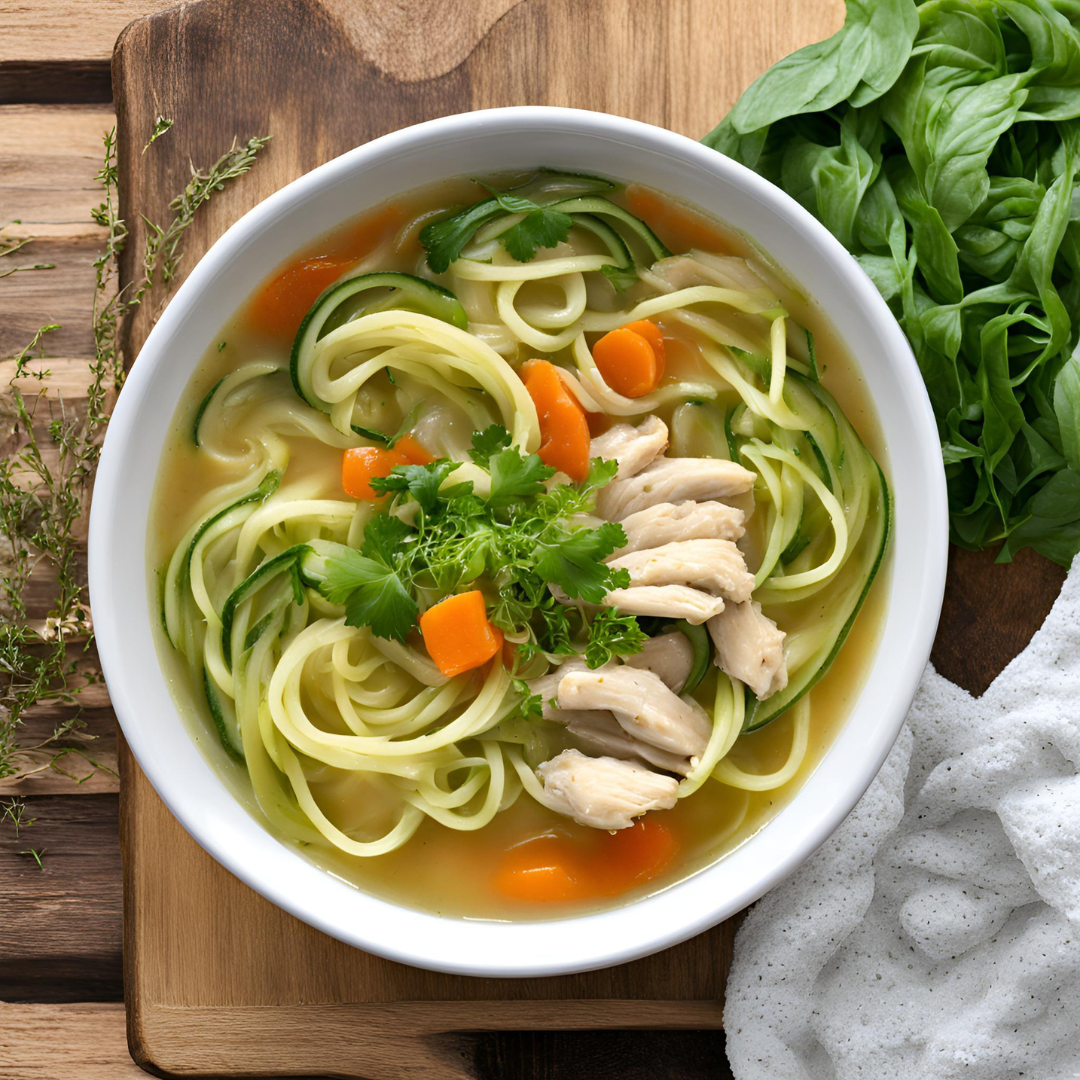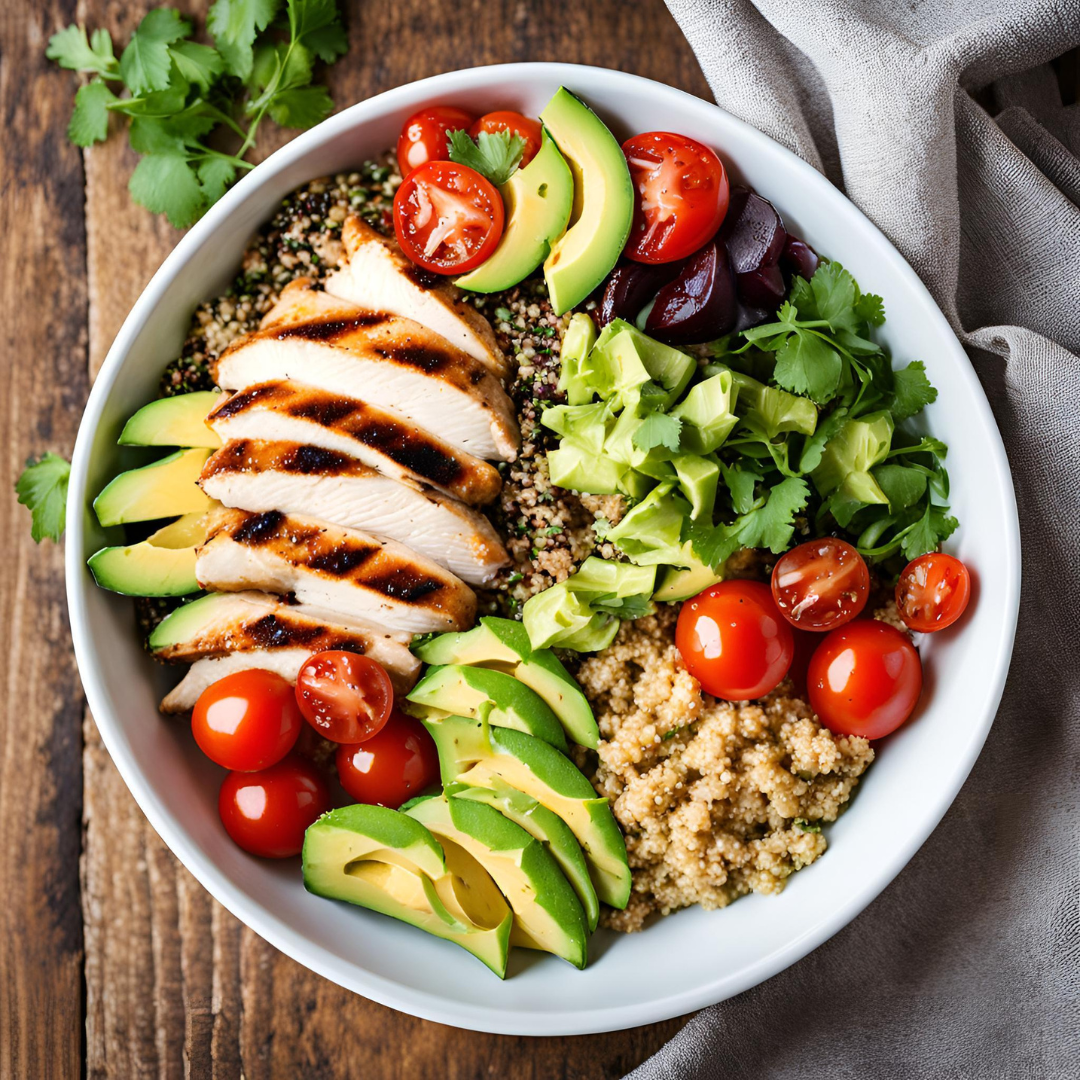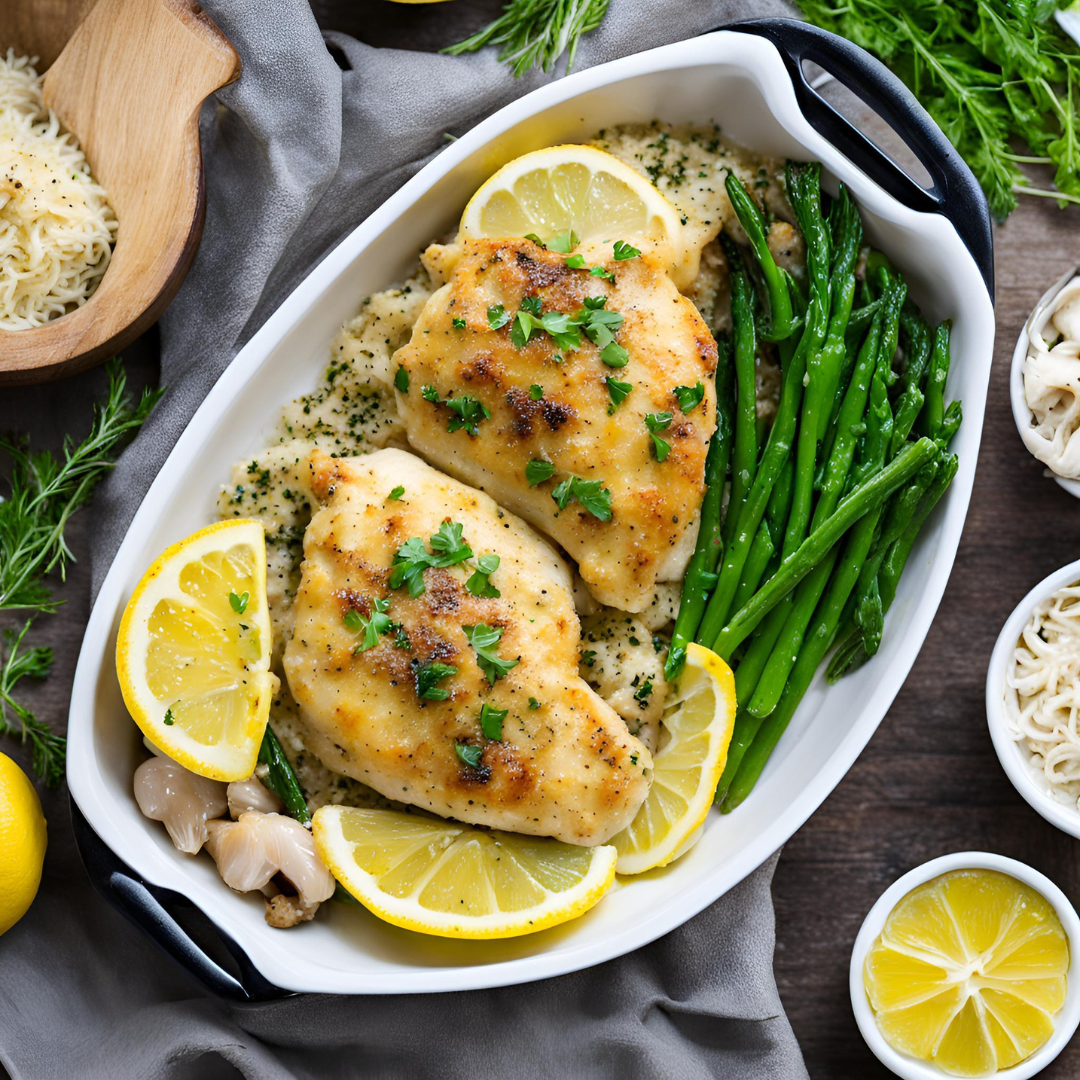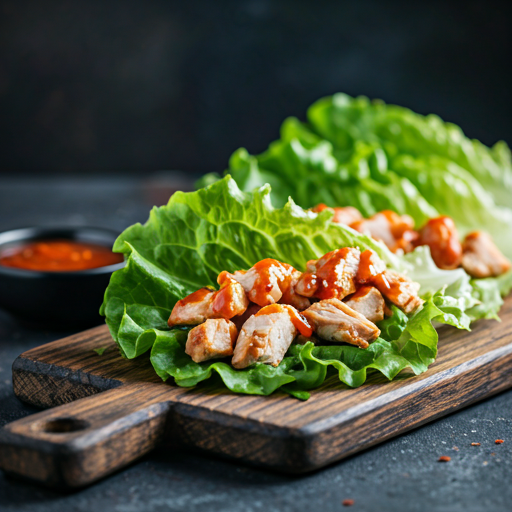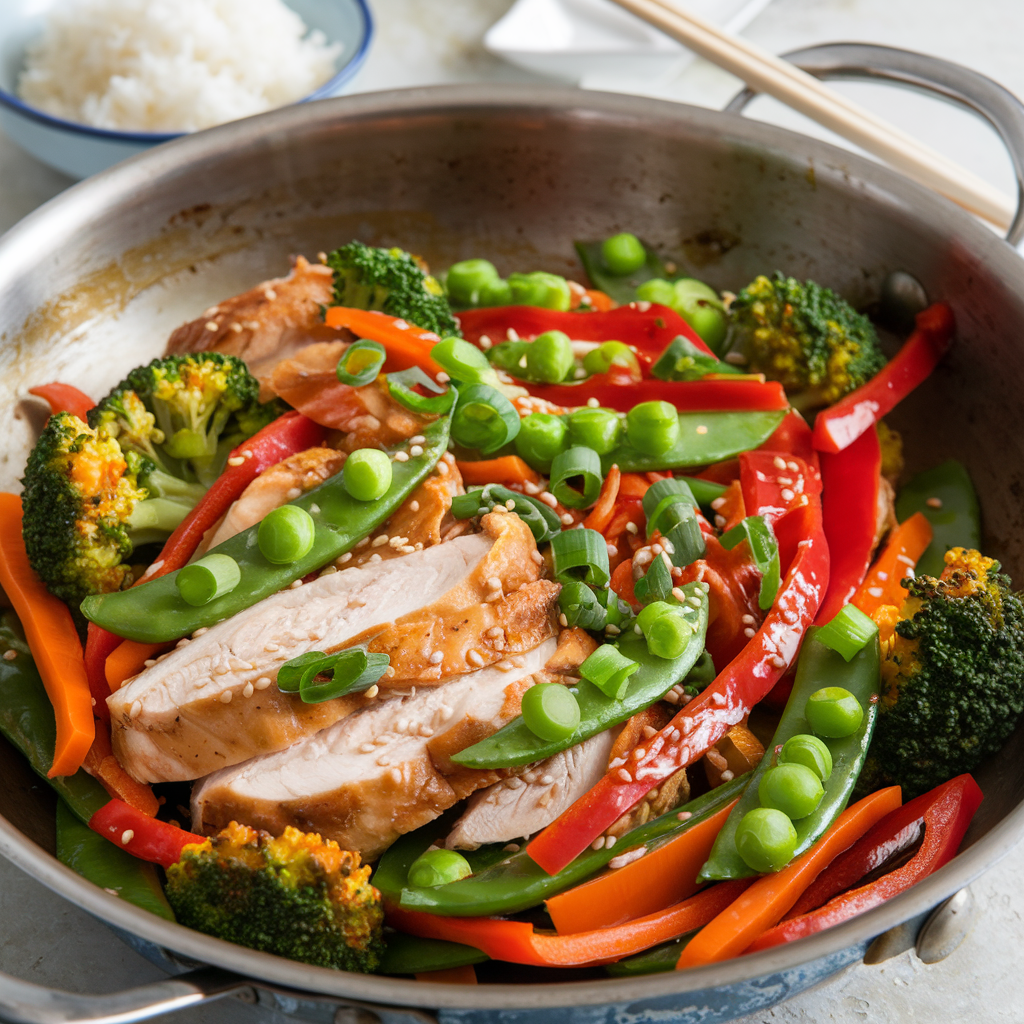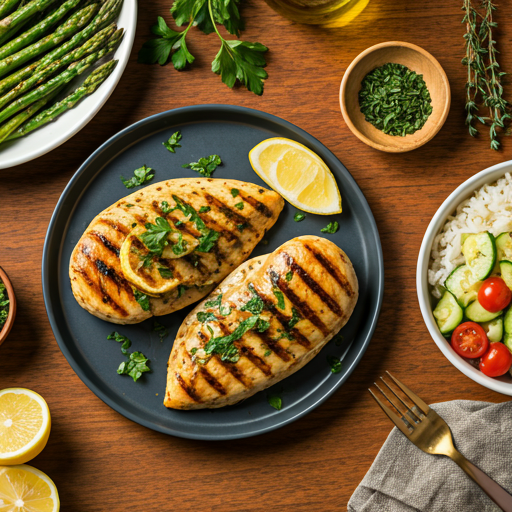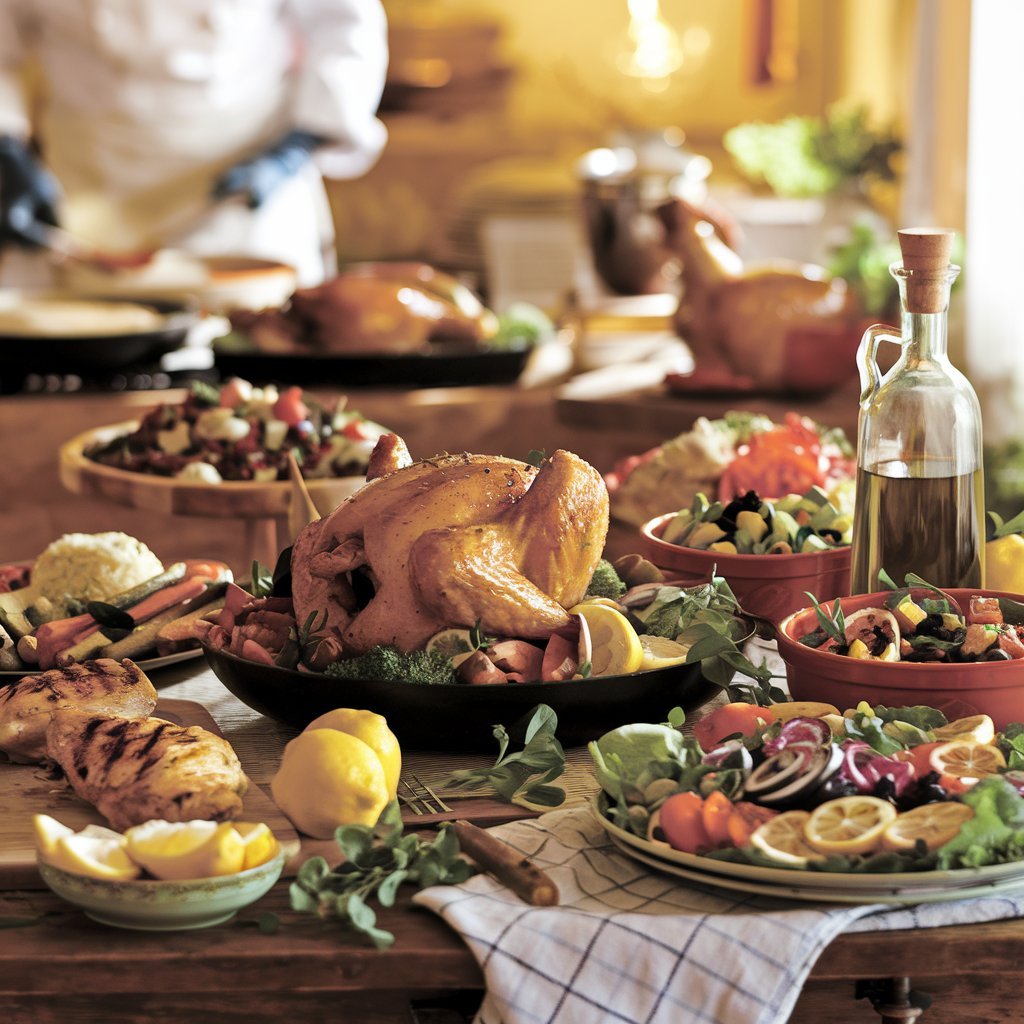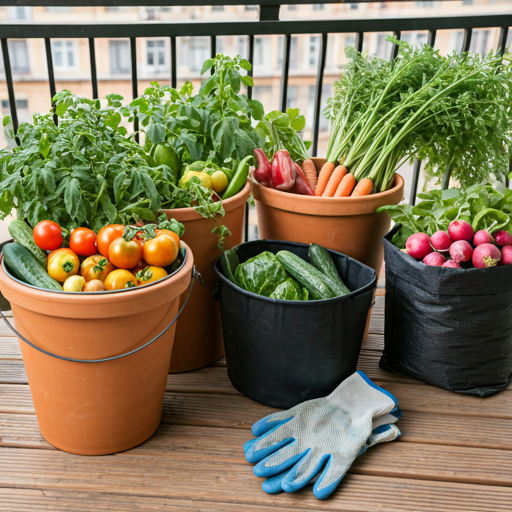
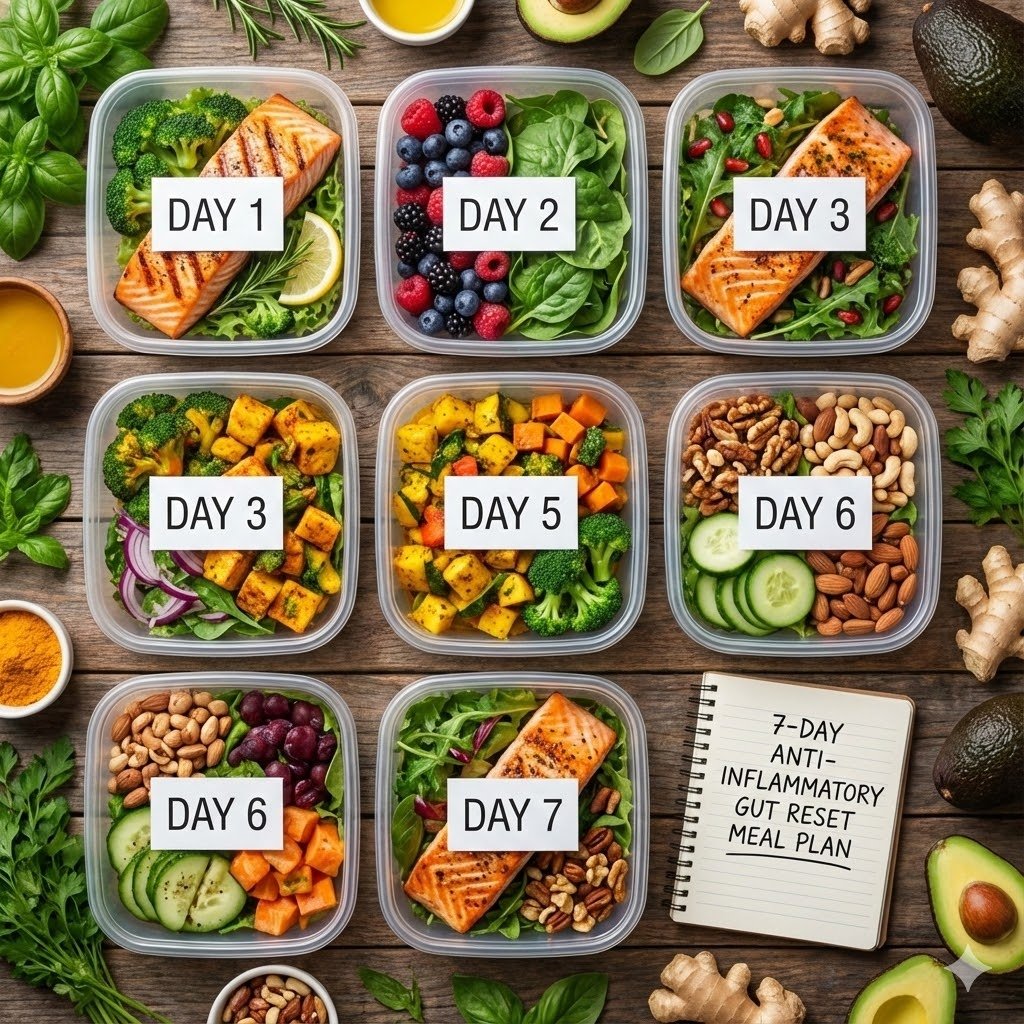
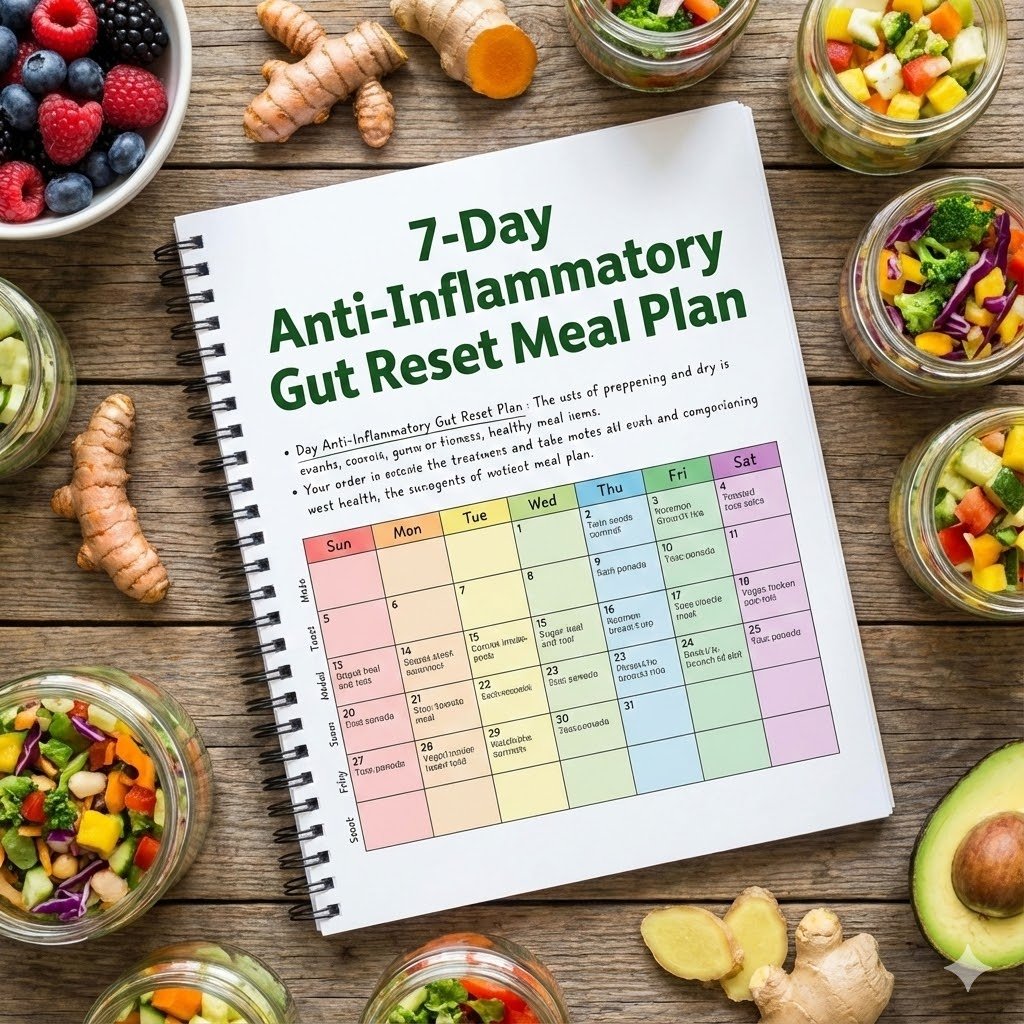
This structured meal plan takes the 15 recipes and builds them into a practical, nourishing week designed to systematically reduce inflammation and give your digestive system the break it needs to heal. Each day balances anti-inflammatory fats, healing fibers, and lean proteins to support your microbiome without overwhelming it.
Thank you for reading this post, don’t forget to subscribe!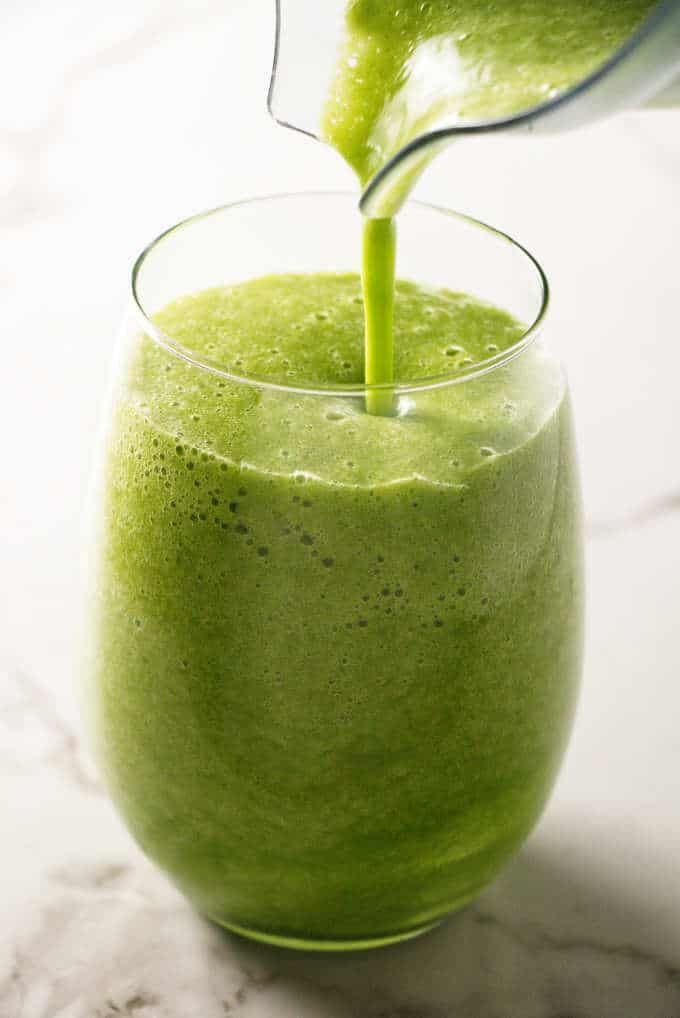
How This Plan Works & Key Principles
- Rotational Diversity: Foods are rotated to provide a wide spectrum of polyphenols and nutrients, which supports a diverse gut microbiome.
- Strategic Leftovers: Lunches often reuse dinner components, saving you time while ensuring consistency.
- Hydration & Rhythm: The plan includes daily herbal tea and emphasizes eating at regular intervals to support digestive enzyme production.
- Listen to Your Body: This is a template. Adjust portion sizes based on hunger cues, and feel free to swap days as needed.
Preparation Guide (Sunday Prep)
To set yourself up for success, spend 1-2 hours prepping these components:
- Batch Cook: Prepare a pot of Turmeric Ginger Bone Broth (Recipe #1) and Lentil & Vegetable Soup (Recipe #13).
- Prep Ingredients: Wash and chop greens for salads and smoothies. Make the Lemon-Tahini Dressing (from Recipe #8). Roast a Root Vegetable Medley (Recipe #11).
- Portion Snacks: Create single-serving bags of nuts or prepare chia puddings (Recipe #12) in jars.
Your 7-Day Gut-Healing Journey
Day 1: Monday – Foundation & Focus
- Breakfast: Signature Anti-Inflammatory Green Smoothie (from linked recipe).
- Lunch: Quinoa Salad with Lemon-Tahini Dressing (Recipe #8).
- Dinner: Omega-3 Rich Salmon Bowl (Recipe #2) with a side of Sautéed Kale (Recipe #9).
- Daily Hydration: Herbal Tea Infusion (Recipe #15) in the afternoon.
- Gut Benefit: Day 1 floods your system with omega-3s, antioxidants, and soluble fiber to kickstart the anti-inflammatory process.
Day 2: Tuesday – Nourish & Soothe
- Breakfast: Kefir & Berry Breakfast Parfait (Recipe #7).
- Lunch: Leftover Lentil & Vegetable Soup (Recipe #13) with a side salad.
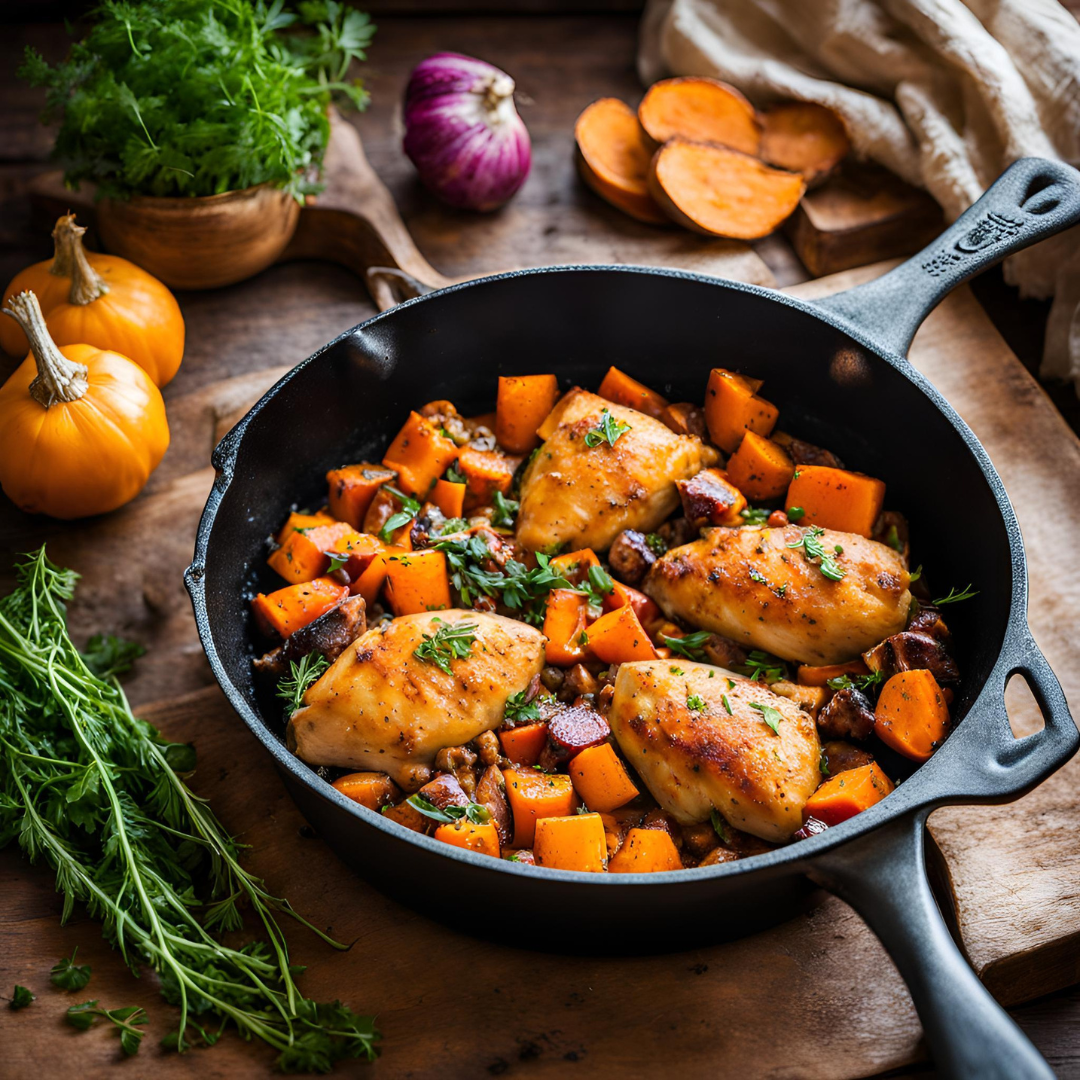
- Dinner: Ginger-Scallion Baked Chicken Thighs (Recipe #5) served with Prebiotic Sautéed Asparagus & Leeks (Recipe #6).
- Snack: A handful of walnuts.
- Gut Benefit: Introduces probiotics from kefir and a powerful prebiotic fiber from leeks to actively feed and fortify your gut bacteria.
Day 3: Wednesday – Plant-Powered & Light
- Breakfast: Chia Seed Pudding with Almonds (Recipe #12).
- Lunch: Large Avocado & Walnut “Green” Salad (Recipe #14) with added chickpeas for protein.
- Dinner: Garlic-Roasted Chickpeas & Broccoli (Recipe #4) over a portion of leftover quinoa.
- Daily Hydration: Warm cup of Bone Broth (Recipe #1) as a mid-afternoon snack.
- Gut Benefit: A higher fiber, plant-based anti-inflammatory day to boost short-chain fatty acid production and promote microbial diversity.
Day 4: Thursday – Recharge & Sustain
- Breakfast: Berry & Spinach Power Smoothie (Recipe #3).
- Lunch: Leftover roasted chicken and vegetables from Tuesday, served cold or reheated.
- Dinner: Simple Sardines on Whole-Grain Toast (Recipe #10) with a large side of mixed greens.
- Snack: Sliced apple with a spoonful of almond butter.
- Gut Benefit: Focuses on lean protein and omega-3s from sardines to support tissue repair and continued inflammation reduction without heavy digestion.
Day 5: Friday – Comfort & Color
- Breakfast: Leftover Chia Pudding or a Kefir Parfait.
- Lunch: Bowl of Turmeric Ginger Bone Broth (Recipe #1) with a soft-boiled egg and spinach stirred in.
- Dinner: Hearty bowl of Lentil & Vegetable Soup (Recipe #13) with a slice of whole-grain toast.
- Gut Benefit: A softer, soup-focused day gives your digestive enzymes a slight rest while providing deeply soothing, liquid-based nutrients that are easy to absorb.
Day 6: Saturday – Exploration & Flavor
- Breakfast: Scrambled eggs with a handful of spinach and a side of Roasted Root Vegetables (Recipe #11).
- Lunch: Leftover Garlic-Roasted Chickpeas & Broccoli in a wrap with tahini dressing.
- Dinner: Build-Your-Own Salmon Bowl: Use leftover salmon or a fresh fillet with quinoa, assorted veggies, and dressing (inspired by Recipe #2).
- Snack: Garlic-Roasted Chickpeas (from Recipe #4) as a crunchy snack.
- Gut Benefit: Encourages mindful eating and enjoyment of varied textures and flavors, which positively impacts digestive signaling.
Day 7: Sunday – Reflect & Prepare
- Breakfast: Berry & Spinach Power Smoothie (Recipe #3).
- Lunch: Leftover soup or a large, clean-out-the-fridge salad with lemon-tahini dressing.
- Dinner: Simple, gentle meal: perhaps a vegetable omelet or a small portion of leftovers.
- Evening Ritual: Cup of Herbal Tea Infusion (Recipe #15).
- Gut Benefit: A lighter, flexible day to allow your system to integrate the week’s nourishment. Use this time to reflect on how you feel and prep for the week ahead.
Frequently Asked Questions
1. Can this meal plan help with weight loss?
While its primary goal is to reduce inflammation and heal the gut, many people experience healthy weight normalization as a side effect. The plan is rich in fiber, healthy fats, and lean protein, which promote satiety, balance blood sugar, and reduce cravings driven by inflammation. Focus on the healing benefits first; body composition often follows.
2. How do I adapt this for IBS or a sensitive stomach?
Go low and slow. For a low-FODMAP adaptation:
- Replace onions/leeks/garlic in recipes with garlic-infused oil (which removes the fermentable carbs).
- Limit portion sizes of chickpeas and lentils to 1/4 cup per meal initially.
- Choose lactose-free kefir or yogurt.
- Consider steaming vegetables instead of roasting them initially for easier digestion.
Always consult with a registered dietitian for personalized guidance.
3. Is this plan expensive to follow?
Not necessarily. The core of the plan is whole foods: lentils, eggs, canned sardines, seasonal vegetables, oats, and frozen berries are cost-effective. Save money by:
- Buying frozen fish (often cheaper and just as nutritious).
- Using turmeric and ginger powder when fresh is cost-prohibitive.
- Preparing every meal at home and using leftovers strategically.
4. What should I drink besides the herbal tea?
Hydration is crucial. Aim for at least 8 glasses of water daily. Other excellent options include:
- Plain water with lemon or cucumber slices.
- Sparkling water.
- Unsweetened green tea (rich in antioxidants).
- Limit or avoid inflammatory beverages like sugary sodas, excessive alcohol, and drinks with artificial sweeteners.
Take the Next Step: Commit to your gut health journey. Save this 7-day plan, shop for the ingredients this weekend, and prepare to feel the difference from the inside out.
Here is your comprehensive Anti-Inflammatory Gut Health Shopping List, containing every ingredient you’ll need to make the 15 recipes and the signature smoothie.
The list is organized by grocery store sections to make your shopping trip efficient. You’ll also find helpful tips for selecting the best-quality ingredients to maximize the gut-healing benefits of your meals.
🛒 The Complete Shopping List
Proteins
- Bones for broth (chicken, beef, or fish)
- Salmon fillets (fresh or frozen)
- Chicken thighs (bone-in, skin-on for best flavor)
- Canned sardines (boneless, skinless, packed in olive oil or water)
- Canned chickpeas (or dried chickpeas to cook)
- Dried lentils (green, brown, or red)
Vegetables
- Leafy Greens: Spinach, Kale
- Cruciferous: Broccoli
- Alliums: Garlic, Onion, Red onion, Leeks, Scallions
- Root Vegetables: Sweet potatoes, Carrots, Beets
- Others: Asparagus, Bok choy, Cucumber, Celery
- Fresh Herbs: Parsley, Dill (optional), Rosemary, Thyme
Fruits
- Fresh: Lemon, Orange, Banana
- Frozen: Mixed berries, Pineapple chunks, Mango chunks
- Other: Cherry tomatoes, Avocado
Dairy & Alternatives
- Kefir (plain, unsweetened)
- Greek yogurt (plain, unsweetened; optional for smoothies)
- Almond milk (unsweetened) or coconut water
Pantry Staples
- Grains: Quinoa, Brown rice, Whole-grain bread
- Seeds: Chia seeds, Ground flaxseed
- Nuts: Walnuts, Almonds (sliced or whole)
- Canned/Jarred: Diced tomatoes, Vegetable broth, Tahini (sesame seed paste)
- Sweeteners: Pure maple syrup (optional), Raw honey (optional)
- Other: Vanilla extract
Spices & Dried Herbs
- Turmeric (fresh root and/or ground powder)
- Ginger (fresh root and/or ground powder)
- Cinnamon sticks
- Ground cumin
- Ground coriander
- Black pepper (whole peppercorns or ground)
Oils, Vinegars & Condiments
- Extra virgin olive oil
- Sesame oil
- Apple cider vinegar
- Rice vinegar
- Dijon mustard
📝 Tips for a Successful Shopping Trip
- Prioritize Quality: Choose wild-caught salmon, organic chicken and eggs, and extra-virgin olive oil for the highest nutrient content and lower toxin exposure.
- Fresh vs. Frozen: Frozen berries, pineapple, and mango are often more affordable, retain their nutrients well, and are perfect for smoothies.
- Buy in Bulk: Purchasing seeds (chia, flax), nuts, spices, and grains from bulk bins can reduce packaging and cost.
- Check Your Pantry: You may already have items like olive oil, vinegar, and basic spices.
- Plan for Prep: If you’re following the 7-day meal plan, consider buying ingredients for the “Sunday Prep” (bone broth, lentil soup, roasted vegetables) first.
Happy cooking! Your gut will thank you for nourishing it with these powerful, anti-inflammatory foods.