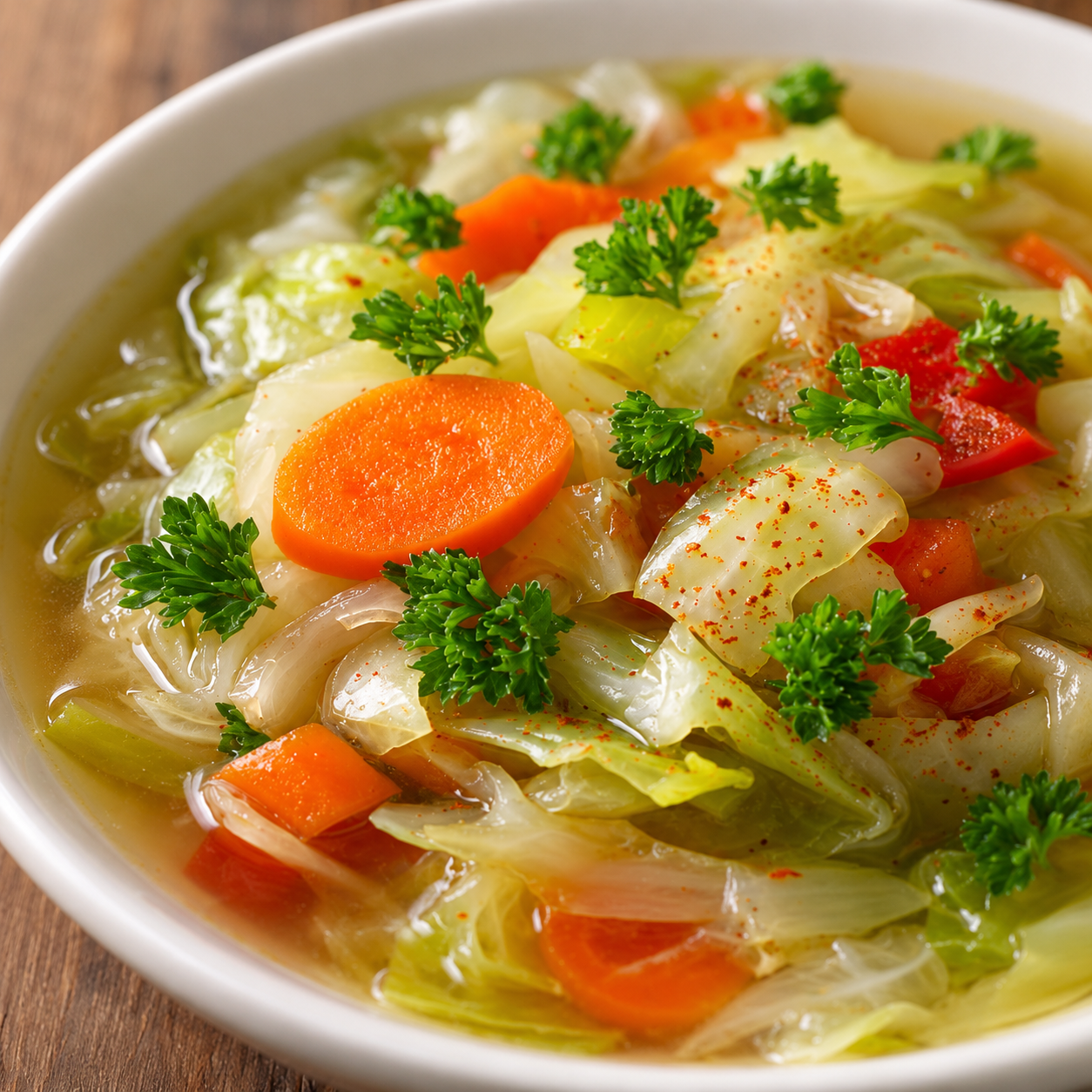
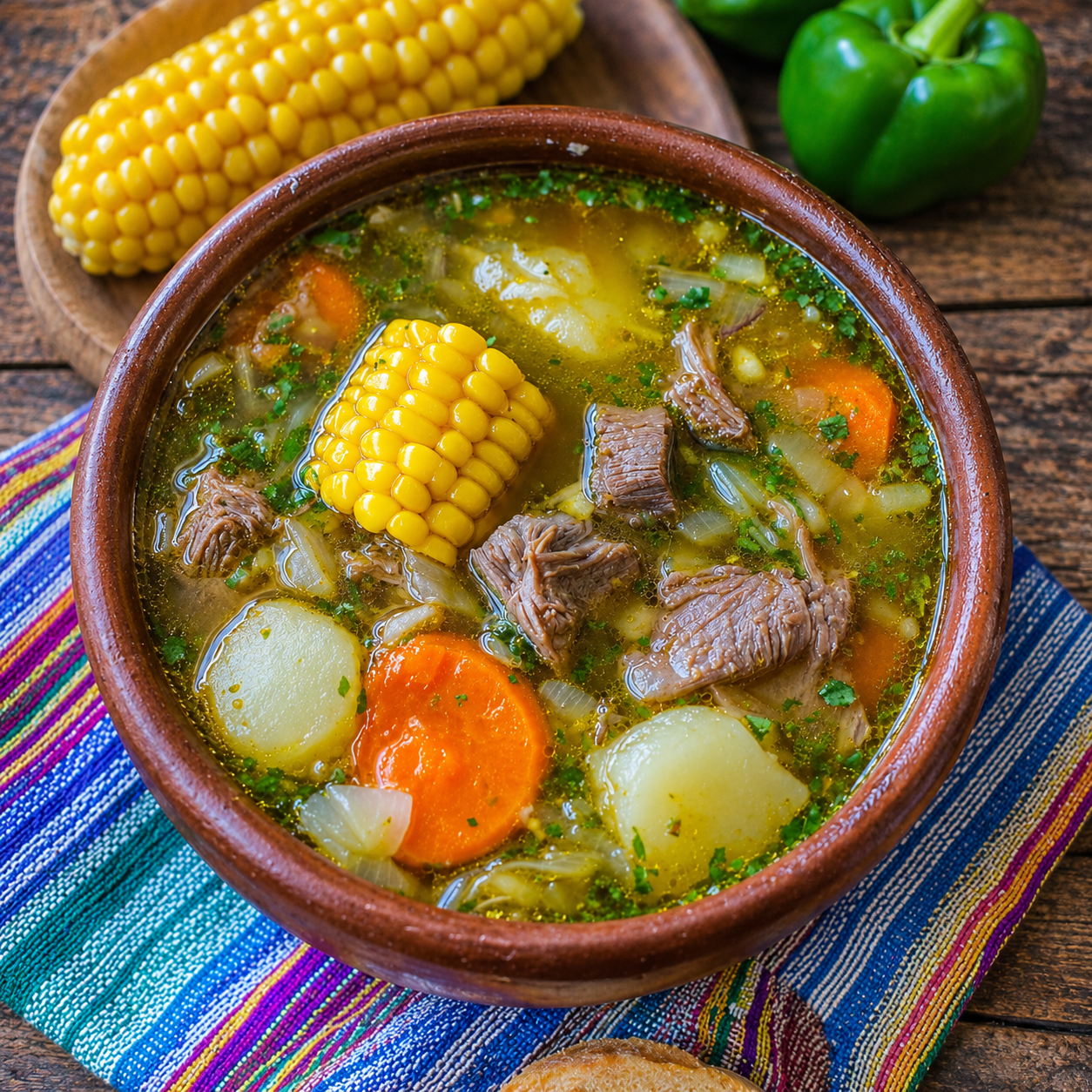
Tender beef, sweet corn, chunky carrots, and potatoes fill a bowl of golden broth in this comforting caldo de res recipe.
Thank you for reading this post, don’t forget to subscribe!This Mexican beef soup takes a little patience, but the preparation is straightforward. The beef simmers with onion and garlic until tender, then the vegetables go in gradually so each one has time to cook without falling apart.
Finish each bowl with fresh cilantro and a squeeze of lime, and serve with warm tortillas for a generous, satisfying meal.
The most useful rule? Let the beef become tender before adding the vegetables.
| Recipe at a glance | Details |
|---|---|
| Servings | Approximately 6 generous servings |
| Prep time | 25 minutes |
| Cooking time | Approximately 2½–3½ hours |
| Total time | Approximately 3–4 hours |
| Method | Stovetop |
| Equipment | Large 8-quart stockpot |
What Is Caldo de Res?
Caldo de res is a Mexican beef and vegetable soup commonly prepared with bone-in beef, corn, carrots, squash, and other vegetables. The meat slowly flavors the cooking liquid, creating a broth that becomes the foundation of the meal.
Recipes vary between families and regions. Some include tomato or a blended tomato mixture called recaudo, while others have a clearer broth. Mexico in My Kitchen’s caldo de res guide describes optional tomato additions and cooking vegetables in stages.
This version uses a golden broth without tomatoes, with beef shank, corn, potatoes, carrots, zucchini, and cabbage. Chiles are served separately so everyone can adjust the heat.
If you enjoy warming homemade soups, save our creamy roasted tomato soup and grilled cheese for another cozy dinner.
The Best Meat for Caldo de Res
Bone-in beef shank is a good starting point for caldo de res. It brings meat, connective tissue, and marrow bones together in one cut.
Look for cross-cut shanks approximately 1–1½ inches thick, with a generous amount of meat surrounding the bone. At a Mexican butcher counter, you may find the cut labeled chambarete.
The connective tissue needs time to soften. A piece that feels firm partway through cooking may simply need a longer simmer.
Can I use another cut?
| Cut | What to expect |
|---|---|
| Bone-in beef shank | The main choice for this recipe; produces a flavorful broth and tender meat after slow cooking. |
| Beef chuck with separately purchased soup bones | An alternative when shank is unavailable; choose well-marbled chuck and check tenderness as it cooks. |
| Bone-in short ribs | A richer alternative that may produce more surface fat to skim. |
These alternatives may require different cooking times. For the recipe below, use beef shank.
Shopping tip: Packages containing mostly bone will produce less meat per serving. Choose meaty pieces rather than relying on package weight alone.
Caldo de Res Ingredients
The complete quantities appear in the recipe card below. Here is what each ingredient contributes.
For the broth
- Bone-in beef shank: The foundation of the soup.
- Water: Allows the beef and aromatics to provide the broth’s flavor.
- White onion and garlic: Add a gentle savory base.
- Bay leaves: Provide a subtle background aroma.
- Salt and black pepper: Season the broth; adjust the salt again near the end.
For the vegetables
- Corn on the cob: Cut each ear into three short sections for easier serving.
- Carrots: Thick slices hold their shape better during simmering.
- Yukon Gold potatoes: Cut into roughly 1½-inch chunks.
- Zucchini: Added toward the end because it softens more quickly.
- Green cabbage: Cut into small wedges, keeping a little core attached to hold them together.
- Fresh cilantro: Stirred in near the end, with more offered at the table.
For serving
Lime wedges, warm corn tortillas, chopped white onion, and sliced jalapeño or serrano peppers are simple finishing options.
Keep the lime for serving. Each person can add enough to brighten their own bowl.
Easy substitutions
- Use Mexican gray squash instead of zucchini.
- Use frozen corn cob sections if fresh corn is unavailable; check tenderness before serving.
- Leave out cilantro if you dislike it.
- Chayote can replace some of the zucchini, but it should go in earlier with the firm vegetables and cook until tender.
How to Make Caldo de Res
1. Start the beef broth
Place 3 pounds bone-in beef shank in a large 8-quart stockpot.
Add the onion, garlic, bay leaves, salt, pepper, and 12 cups water. The water should cover the beef; add a little more if needed.
Bring just to a boil, then reduce the heat to maintain a gentle simmer. Skim off the gray or tan foam that collects on the surface during the early part of cooking.
Look for small, steady bubbles rather than a vigorous rolling boil.
2. Simmer until the beef is tender
Partially cover the pot and simmer for approximately 2–3 hours, checking the meat from around 90 minutes onward.
Add small amounts of hot water as needed to keep the beef submerged.
The beef is ready when a fork slides in easily and the meat pulls apart with gentle pressure. If it still feels rubbery or resistant, continue cooking and check again after 20–30 minutes.
Do not add the vegetables just because the timer has finished. Check the meat first.
3. Remove the bones and spent aromatics
Transfer the shanks to a plate.
Remove and discard the onion, garlic, and bay leaves from the broth.
When the beef is cool enough to handle, separate it from the bones and remove any remaining tough connective tissue. Check carefully for small bone fragments.
Cut or pull the meat into generous bite-sized pieces. Keep it covered while the vegetables cook.
If there are loose fragments in the broth, strain it through a fine-mesh sieve into another heatproof pot.
4. Add the firm vegetables
Bring the broth back to a gentle simmer.
Add the corn, carrots, and potatoes. Simmer for approximately 15–20 minutes, until the potatoes are nearly tender but still offer a little resistance in the center.
Keep the vegetables mostly submerged. Add a little hot water if necessary, but avoid diluting the broth more than needed.
5. Add the zucchini and cabbage
Add the zucchini and cabbage.
Simmer for another 8–12 minutes, or until the potatoes are tender and the zucchini and cabbage are cooked to your liking.
Return the beef to the pot for the final few minutes and heat it through. Stir in the chopped cilantro.
Vegetable Timing Guide
Start this sequence only after the beef is tender. These are approximate ranges; the size of the pieces and strength of the simmer affect cooking time.
| Vegetable | Cut size | When to add | Approximate total simmering time |
|---|---|---|---|
| Corn | Each ear cut into thirds | First, with carrots and potatoes | 23–32 minutes |
| Carrots | ¾-inch slices | First vegetable addition | 23–32 minutes |
| Potatoes | 1½-inch chunks | First vegetable addition | 23–32 minutes |
| Cabbage | Small wedges | When potatoes are nearly tender | 8–12 minutes |
| Zucchini | 1-inch pieces | With cabbage | 8–12 minutes |
If the potatoes are still quite firm after the first 20 minutes, give them more time before adding the zucchini.
6. Taste and serve
Taste the broth once all the vegetables are cooked.
Add salt in small increments, stirring and tasting between additions. The final amount depends partly on how much liquid evaporated.
Divide the beef, corn, and vegetables between deep bowls, then ladle the broth over them.
Serve with fresh cilantro, lime wedges, and warm tortillas.
Troubleshooting Your Soup
Why is my beef still tough?
It probably needs more time at a gentle simmer. Keep the meat submerged and continue cooking before adding the vegetables. Use tenderness as the deciding factor rather than a fixed time.
Why does my broth taste bland?
First, check the seasoning. An under-salted broth can taste weak even when the beef has cooked thoroughly. If the broth tastes watery, remove the cooked solids and simmer the liquid uncovered to concentrate it. Taste again before adding more salt. Finish individual bowls with lime for brightness.
Why are my vegetables falling apart?
They may have been cut too small, added too early, or cooked at too vigorous a boil. Keep the pieces substantial and add zucchini and cabbage after the firmer vegetables have started to soften.
Why is there fat on the surface?
Some fat is expected from bone-in beef. Skim off excess with a spoon if you prefer a lighter broth. When making the broth ahead, chilling it makes the solidified surface fat easier to remove.
What to Serve with Caldo de Res
This soup already contains meat, potatoes, corn, and vegetables, so it does not need an elaborate side dish.
Good accompaniments include:
- Warm corn tortillas
- Mexican rice served separately
- Lime wedges and chopped cilantro
- Finely chopped white onion
- Sliced fresh chiles or your favorite salsa
- Avocado slices
For another slow-simmered dinner with meat and vegetables, try our Moroccan-style chicken tagine with potatoes, carrots, and olives.
Make-Ahead, Storage, and Reheating
Make the beef and broth ahead
Prepare the beef and broth a day before serving, stopping before adding the vegetables. Remove the bones and spent aromatics, then divide the beef and broth into shallow containers and refrigerate promptly. The next day, remove any excess solidified fat. Reheat the broth and beef thoroughly, then follow the vegetable sequence above. This approach lets you finish the vegetables closer to mealtime.
Refrigerate leftovers
Divide leftover soup into shallow containers rather than leaving a large stockpot on the counter to cool completely. Refrigerate within 2 hours, or within 1 hour if the temperature is above 90°F/32°C. Keep refrigerated leftovers for 3–4 days. See the USDA’s leftover storage guidance.
Freeze for later
Freeze in meal-sized portions, leaving space in each container for expansion. Aim to use within 2–3 months for best quality. Potatoes and zucchini may become softer after thawing. For better texture, freeze the beef and broth separately and add fresh vegetables when preparing the next meal.
Reheat thoroughly
Reheat on the stove, stirring carefully to distribute the heat. Bring the soup to a boil and check that the beef and vegetables reach 165°F/74°C throughout, following the USDA’s reheating recommendations.
Frequently Asked Questions
Is caldo de res spicy?
This version is mild because it contains no chiles in the broth. Serve sliced chiles or salsa separately for anyone who wants heat.
Do I need to brown the beef?
Not for this version. The beef simmers directly in water with the aromatics. Other preparations brown the meat first, but this recipe follows a simpler broth-making method.
Does caldo de res contain tomatoes?
Some versions do, while others do not. This recipe leaves them out to keep the broth golden.
Can I use boneless stew meat?
You can make beef soup with boneless meat, but the result depends on the cut in the package. For a more predictable alternative, choose beef chuck and add separately purchased soup bones. Expect to adjust the cooking time.
Can I make this in a slow cooker or Instant Pot?
Those methods require different liquid amounts, capacity checks, and cooking instructions. This recipe is written for the stovetop; do not transfer the full batch directly into a pressure cooker.
Recipe Card
Caldo de Res (Mexican Beef Soup) with Tender Beef & Vegetables
A comforting Mexican beef soup with bone-in beef shank, golden broth, corn, carrots, potatoes, zucchini, and cabbage. The vegetables are added in stages to help preserve their texture.
Prep: 25 minutes
Cook: Approximately 2½–3½ hours
Total: Approximately 3–4 hours
Yield: Approximately 6 generous servings
Cuisine: Mexican
Course: Main course, soup
Equipment: 8-quart stockpot
Ingredients
For the beef and broth
- 3 pounds (1.36 kg) meaty bone-in beef shank, cross-cut approximately 1–1½ inches thick
- 12 cups (2.84 liters) water, plus additional hot water as needed
- 1 medium white onion, peeled and quartered
- 6 garlic cloves, peeled and lightly crushed
- 2 bay leaves
- 2 teaspoons fine sea salt, plus more to taste
- ½ teaspoon freshly ground black pepper
For the vegetables
- 2 ears corn, husked and each cut into 3 sections
- 3 medium carrots, peeled and cut into ¾-inch-thick slices
- 1 pound (450 g) Yukon Gold potatoes, cut into 1½-inch chunks
- 2 medium zucchini, cut into 1-inch-thick pieces
- ¼ medium green cabbage, approximately 12 ounces (340 g), cut into small wedges
- ⅓ cup chopped fresh cilantro
For serving
- 2 limes, cut into wedges
- Additional chopped cilantro
- Warm corn tortillas
- Chopped white onion, optional
- Sliced jalapeño or serrano peppers, optional
Instructions
- Start the broth. Place the beef, water, onion, garlic, bay leaves, salt, and pepper in an 8-quart stockpot. Add a little extra water if necessary to cover the beef. Bring just to a boil, then reduce to a gentle simmer. Skim off surface foam.
- Tenderize the beef. Partially cover and simmer for approximately 2–3 hours, checking from around 90 minutes onward. Add hot water as needed to keep the meat submerged. Continue until the beef separates easily with a fork.
- Remove bones and aromatics. Transfer the beef to a plate. Discard the onion, garlic, and bay leaves. When manageable, remove the bones and tough connective tissue, check for bone fragments, and cut the meat into bite-sized pieces. Keep covered. Strain the broth if necessary.
- Cook the firm vegetables. Bring the broth to a gentle simmer. Add corn, carrots, and potatoes. Cook for approximately 15–20 minutes, until the potatoes are nearly tender. Allow more time if they remain firm.
- Finish the soup. Add zucchini and cabbage. Simmer for approximately 8–12 minutes, until all vegetables are tender. Return the beef during the final few minutes and heat through. Stir in cilantro.
- Season and serve. Taste and adjust the salt. Divide the meat and vegetables between bowls, ladle over the broth, and serve with lime wedges, tortillas, and optional toppings.
Recipe Notes
- Timing: Meat tenderness and vegetable doneness take priority over the clock.
- Liquid: Add enough hot water to maintain coverage without unnecessarily diluting the broth.
- Salt: The listed amount is a starting point. Adjust after simmering.
- Storage: Refrigerate promptly in shallow containers and use within 3–4 days.
- Reheating: Bring soup to a boil and ensure the solids reach 165°F/74°C throughout.
Looking for your next comforting bowl? Try our Olive Garden–style chicken gnocchi soup for a creamy dinner, or our roasted butternut squash soup for a smooth vegetable soup.