By Polia · Healthy Recipes
Thank you for reading this post, don’t forget to subscribe!Eggs are great. Eggs are also, at some point, just eggs.
If you’ve been eating scrambled eggs every morning for the last three months because you know they’re high in protein and you can make them fast, and somewhere around week six it stopped feeling like breakfast and started feeling like a homework assignment — this post is for you.
High-protein breakfasts don’t require eggs. There are options that are faster, more interesting, genuinely filling, and better suited to the mornings where you have six minutes and a phone in your hand and absolutely no desire to stand at a stove.
Before we get into the eight, a quick note on why protein at breakfast actually matters — because it’s not just a fitness thing.
Eating protein in the morning stabilises your blood sugar for the entire first half of your day. Stable blood sugar means stable energy, stable mood, and — this is the one that changes everything — no 10:30am crash that sends you to the snack drawer and then into a whole spiral of eating things you didn’t mean to eat. It also means your cortisol response first thing in the morning (which is naturally elevated as part of your wake cycle) doesn’t get amplified by a blood sugar spike and crash from a carb-heavy breakfast.
(If you’ve been wondering why stress has been affecting your energy, appetite, and even your desire — here’s how cortisol and your hormone health connect, and why the morning meal matters more than you think.)
The goal is at least 25–30 grams of protein at breakfast. Each of these delivers that, without a single egg in sight.
1. Greek Yogurt Parfait with Protein Granola
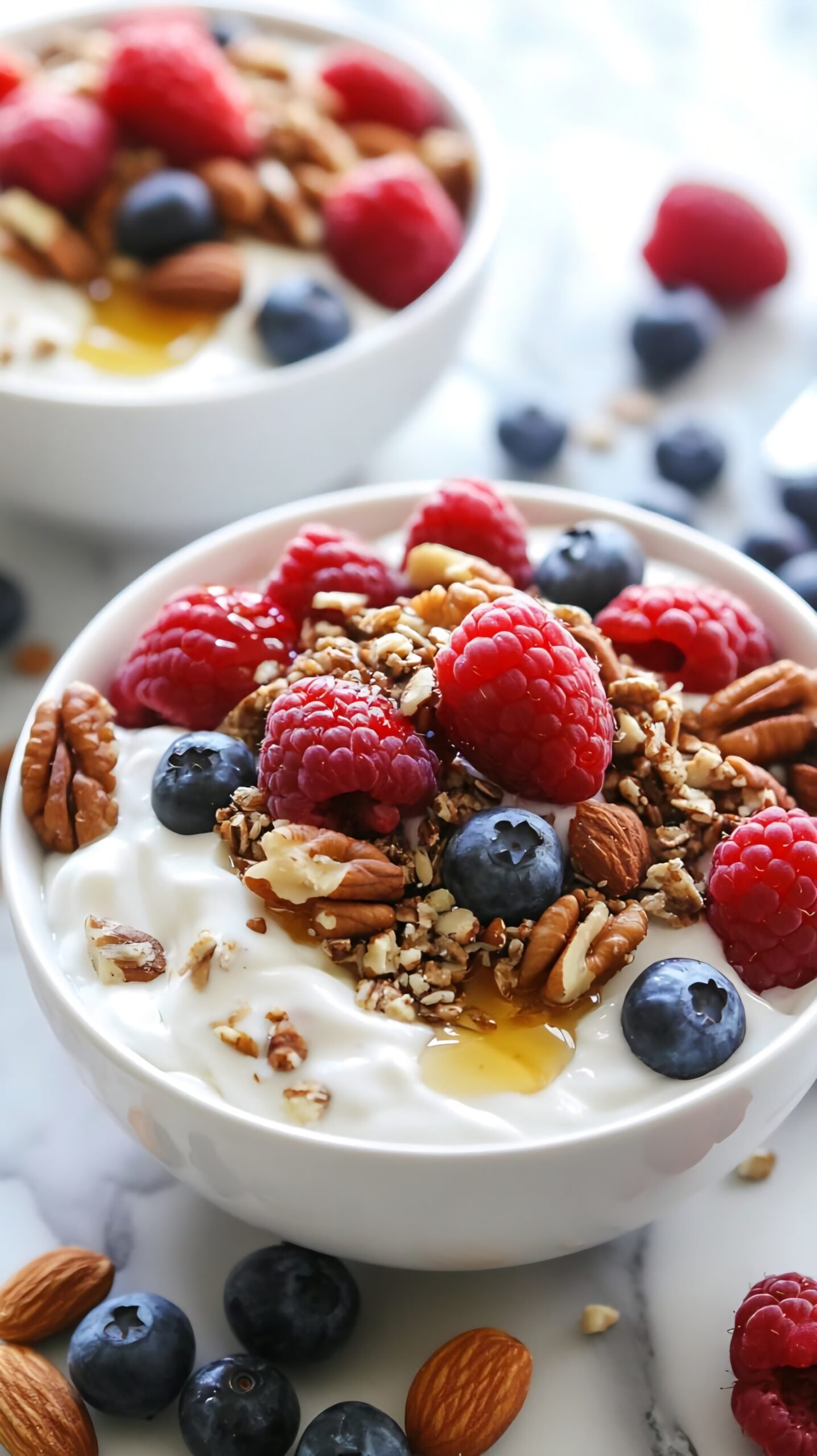
Protein: 28–35g | Time: 5 minutes | Cook required: None
This is the breakfast for mornings when you have exactly the time it takes to open two containers and layer things.
Use full-fat or 2% Greek yogurt — not the flavoured, low-fat kind. Full-fat Greek yogurt has significantly more protein per serving, keeps you fuller longer (fat slows digestion), and doesn’t contain the added sugars that make the flavoured versions send your blood sugar spiking immediately after.
The base (per serving):
- 1 cup (227g) plain Greek yogurt — ~20g protein. Fage 2% is consistently recommended for the balance of protein content, taste, and texture.
- 1/2 cup protein granola — Purely Elizabeth Probiotic Granola or RX Bar Granola adds another 8–10g protein while giving you the crunch that makes this feel like a real breakfast
- Fresh or frozen berries (thawed overnight in the fridge)
- Drizzle of honey or almond butter (1 tablespoon)
The detail that makes it better: Layer it. Yogurt, half the granola (so it stays crunchy), berries, remaining granola on top. The texture contrast is what makes Greek yogurt feel like a meal rather than a snack.
Prep ahead: Portion the yogurt into jars on Sunday. Add fresh toppings in the morning. Refrigerator-ready breakfast in literally 90 seconds.
2. Cottage Cheese Bowl (Sweet or Savoury)
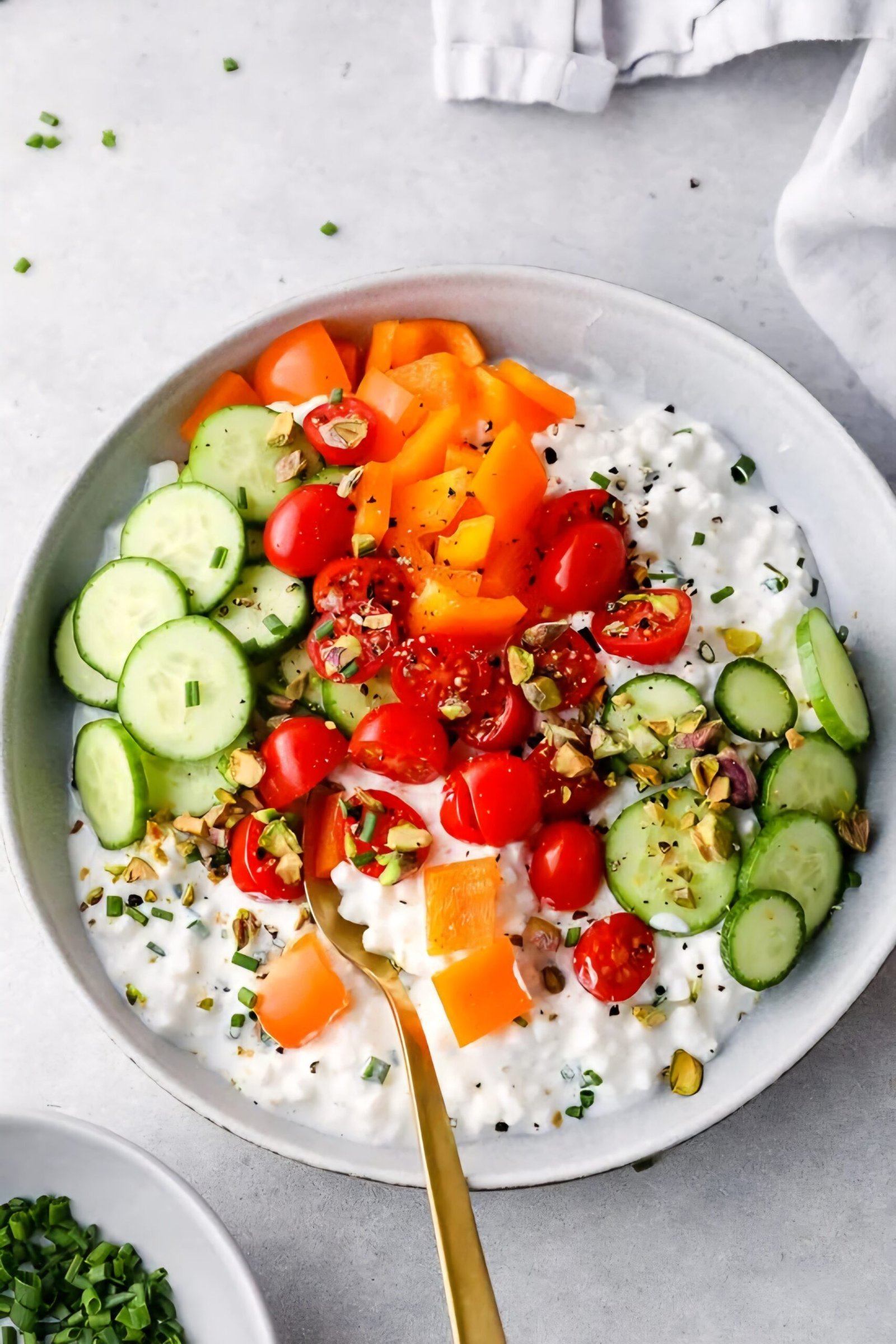
Protein: 25–30g | Time: 3 minutes | Cook required: None
Cottage cheese had a moment on TikTok and it earned it. A single cup of cottage cheese has 25 grams of protein, a creamy texture, and virtually no flavour of its own — which means it takes on whatever you put with it perfectly.
Sweet version:
- 1 cup full-fat cottage cheese
- 1/2 cup sliced strawberries or peaches
- 1 tablespoon honey
- 1 tablespoon hemp seeds (+3g protein)
- Pinch of cinnamon
- Optional: 1 tablespoon almond butter stirred through
Savoury version (underrated, genuinely delicious):
- 1 cup full-fat cottage cheese
- Sliced cherry tomatoes and cucumber
- Everything bagel seasoning
- Drizzle of olive oil
- Cracked black pepper
- Optional: smoked salmon on top (+7g protein)
Good Culture Cottage Cheese has the cleanest ingredient list in most grocery stores and a noticeably creamier texture than store brands.
3. Protein Smoothie That Actually Keeps You Full
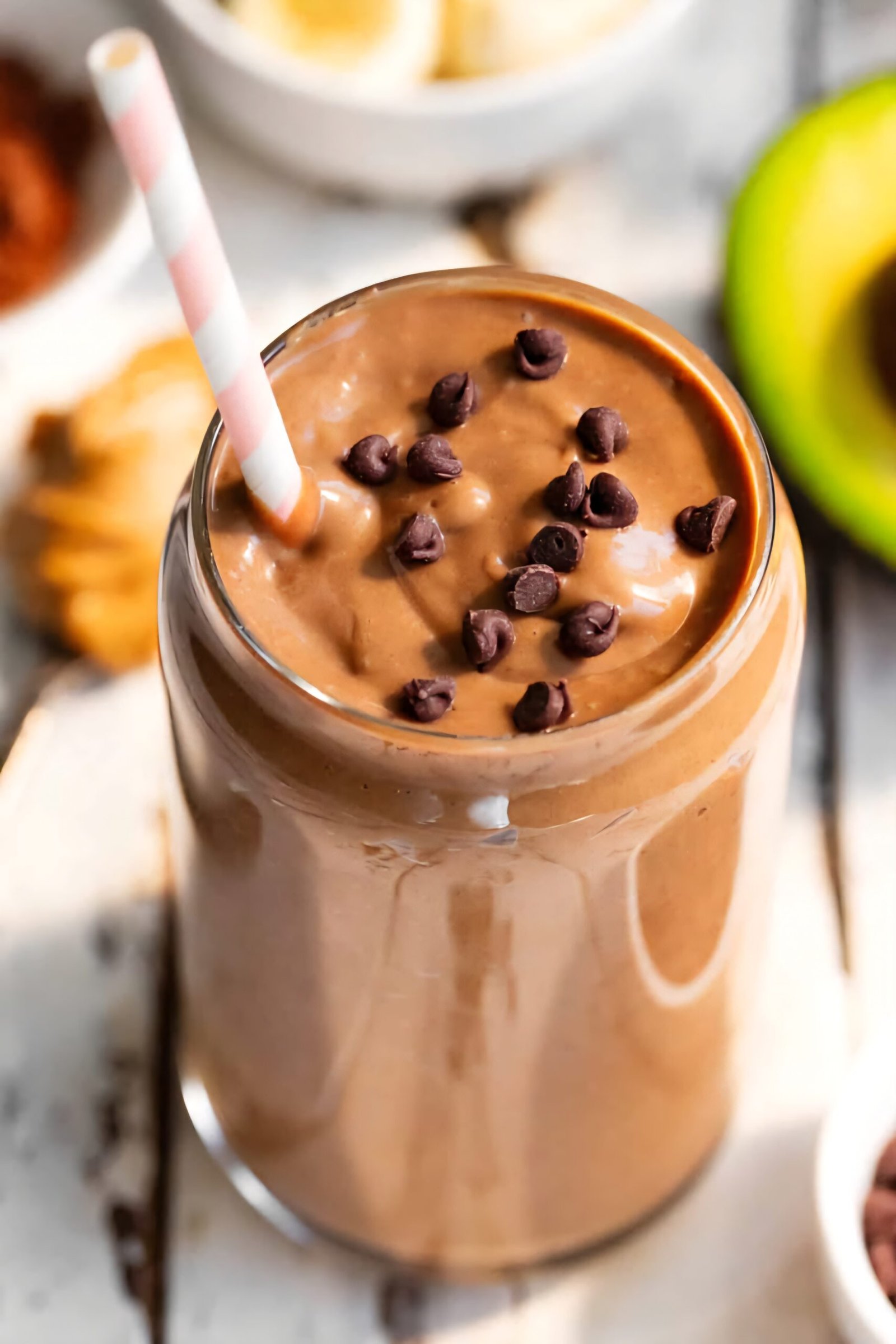
Protein: 30–40g | Time: 5 minutes | Cook required: No (blender only)
The reason most smoothies don’t keep you full until lunch is that they’re mostly fruit and milk — high sugar, low fat, low protein. This formula fixes that.
The base formula:
- 1 scoop protein powder (25–30g protein)
- 1 cup unsweetened almond milk or regular milk
- 1 tablespoon almond or peanut butter
- 1/2 frozen banana
- 1 handful frozen spinach — completely flavourless once blended
- 1 tablespoon ground flaxseed
Flavour variations:
- Chocolate peanut butter: chocolate protein powder + peanut butter + banana
- Strawberry vanilla: vanilla protein powder + frozen strawberries + almond butter
- Green goddess: vanilla protein powder + spinach + frozen mango + coconut milk
- Coffee protein: vanilla protein powder + cold brew concentrate + almond milk + cinnamon
Prep faster: Portion your dry smoothie ingredients into individual bags or jars on Sunday. Grab a bag, add liquid and frozen fruit, blend. Done.
4. Smoked Salmon and Cream Cheese Toast
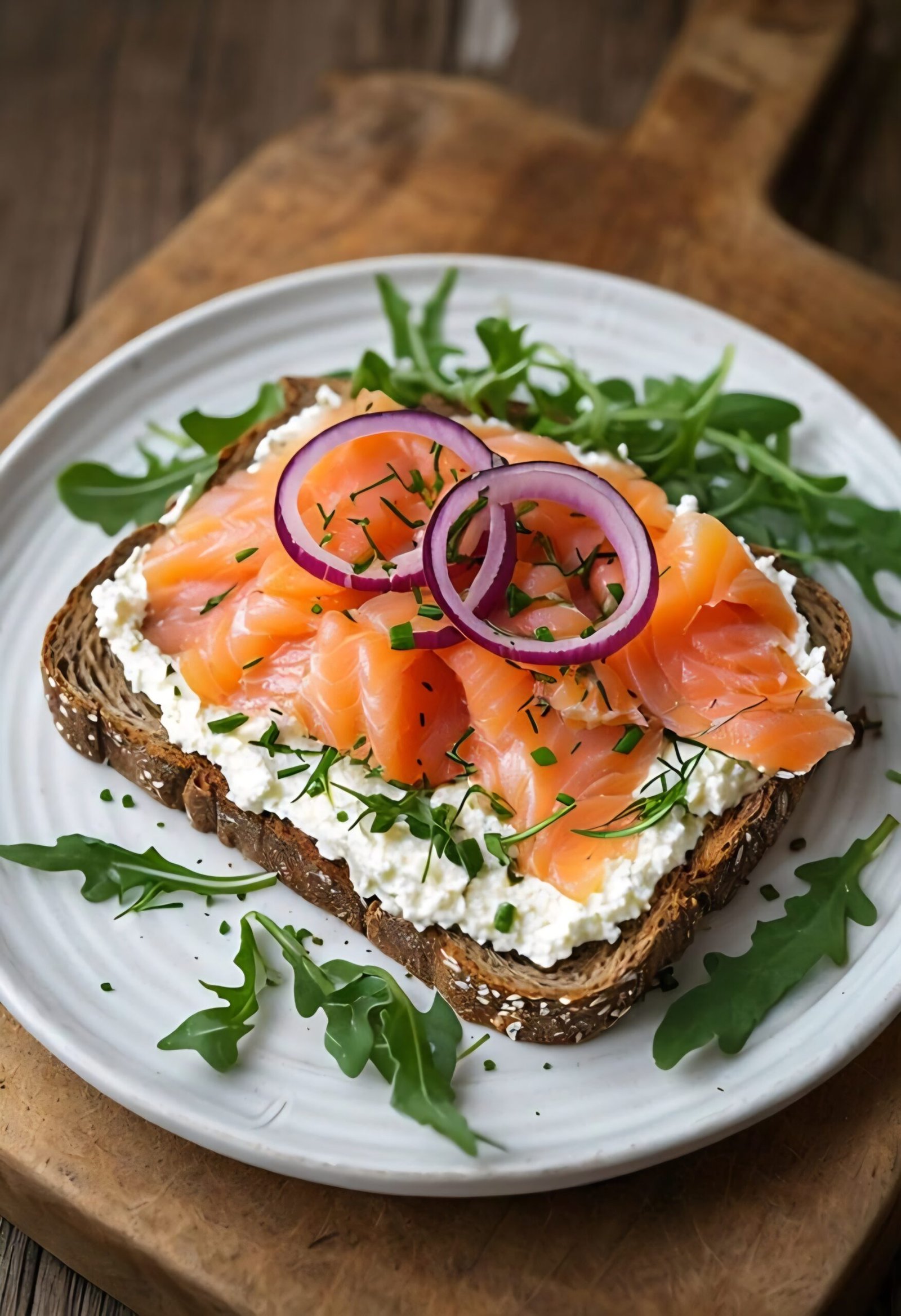
Protein: 25–30g | Time: 5 minutes | Cook required: No
This is the breakfast that makes weekday mornings feel like a weekend brunch without adding any actual effort.
Per serving:
- 2 slices whole grain or sourdough bread, toasted
- 3oz (85g) smoked salmon — delivers ~18g protein
- 2–3 tablespoons cream cheese
- Capers (1 tablespoon)
- Thinly sliced red onion
- Fresh dill if you have it
- Squeeze of lemon
The upgrade: Everything bagel seasoning on top of the cream cheese layer before the salmon. Costs nothing, adds everything.
Total cost per serving: Under $5 when you buy salmon in multi-packs. Cheaper than a café breakfast and significantly more protein.
5. Cottage Cheese Protein Pancakes (3 Ingredients)
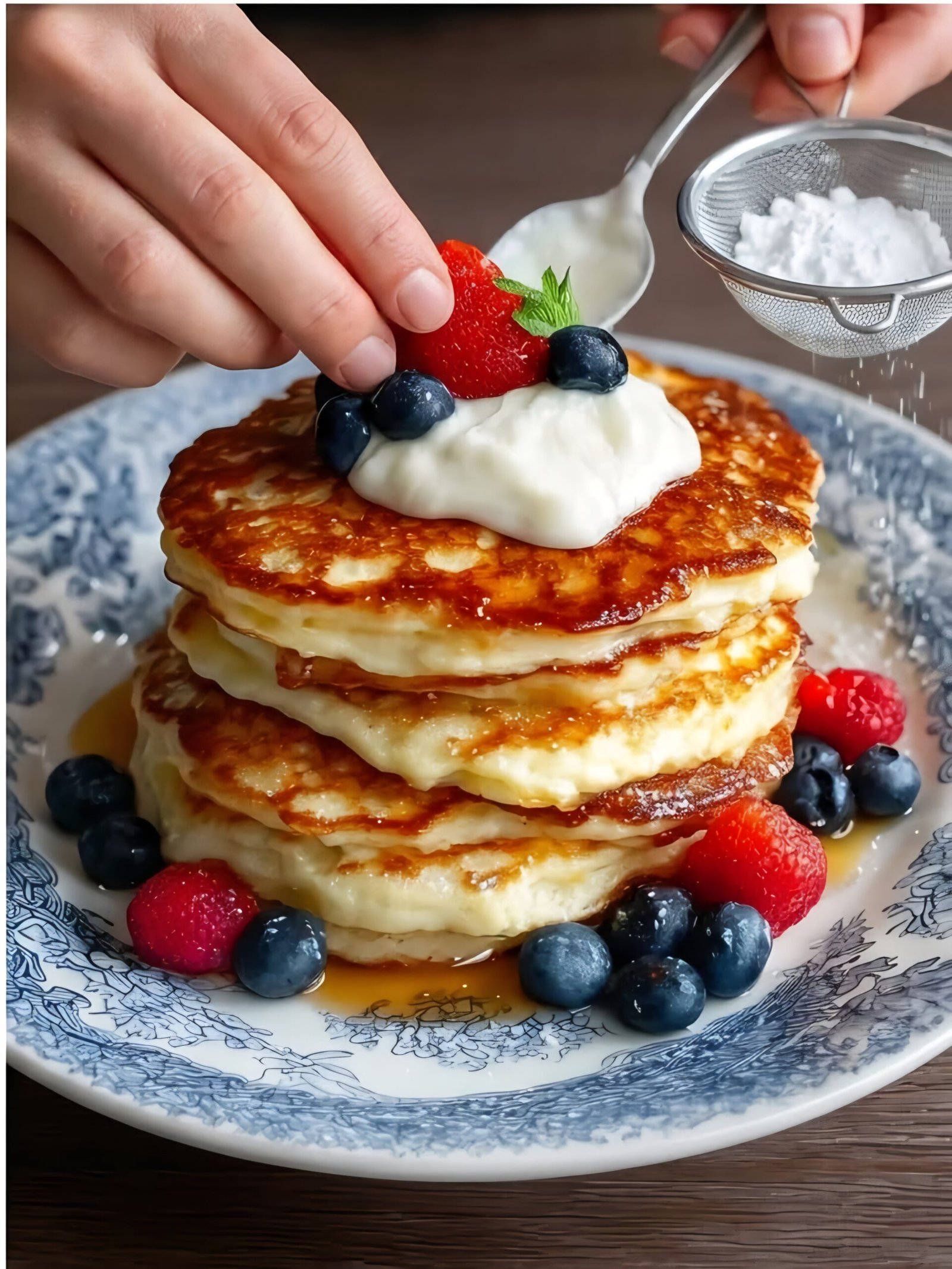
Protein: 28–32g | Time: 12 minutes | Cook required: Yes (stovetop)
These take 12 minutes, use a blender, and have more protein than most protein bars. They look like regular pancakes and taste like regular pancakes but do something very different for your blood sugar.
Ingredients (makes 6–8 small pancakes, serves 1):
- 1/2 cup (113g) cottage cheese
- 1/2 cup rolled oats
- 1 scoop vanilla protein powder (optional but adds another 20–25g)
- 1 teaspoon vanilla extract
- Pinch of cinnamon + pinch of salt
- 2–4 tablespoons milk (to consistency)
Method: Blend everything until smooth — the oats fully break down and the cottage cheese becomes a smooth batter. Cook on a non-stick pan over medium-low heat, 2–3 minutes per side. They’re smaller and more delicate than regular pancakes — don’t rush the flip.
Top with: Fresh berries and a tablespoon of nut butter, or Greek yogurt and honey instead of maple syrup.
6. Nut Butter and Banana Protein Toast
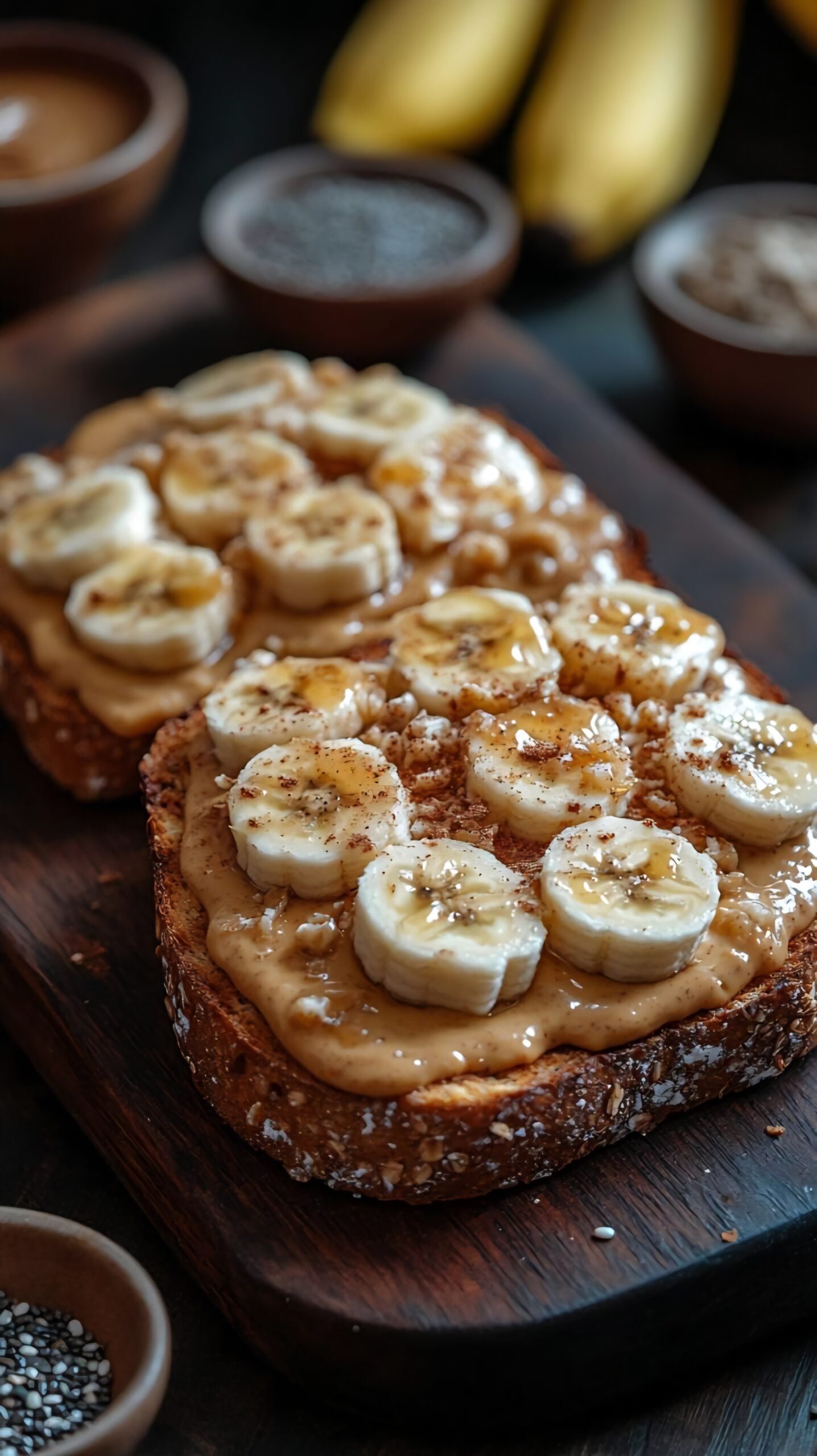
Protein: 20–25g | Time: 4 minutes | Cook required: No
Base:
- 2 slices whole grain bread, toasted — Dave’s Killer Bread has 5g protein per slice vs. 2g in white bread
- 2 tablespoons almond or peanut butter — adds ~8g protein
- 1 small banana, sliced
- Drizzle of honey + pinch of flaky salt
Make it higher protein:
- Add 1 tablespoon hemp seeds on top (+3g protein)
- Serve with a side of Greek yogurt (brings total to 28–32g)
Topping combinations that work:
- Peanut butter + banana + honey + dark chocolate chips
- Almond butter + sliced apple + cinnamon + granola
- Cashew butter + mango + toasted coconut + lime zest
- Any nut butter + strawberries + balsamic glaze + basil (sounds odd, is excellent)
7. High-Protein Overnight Oats
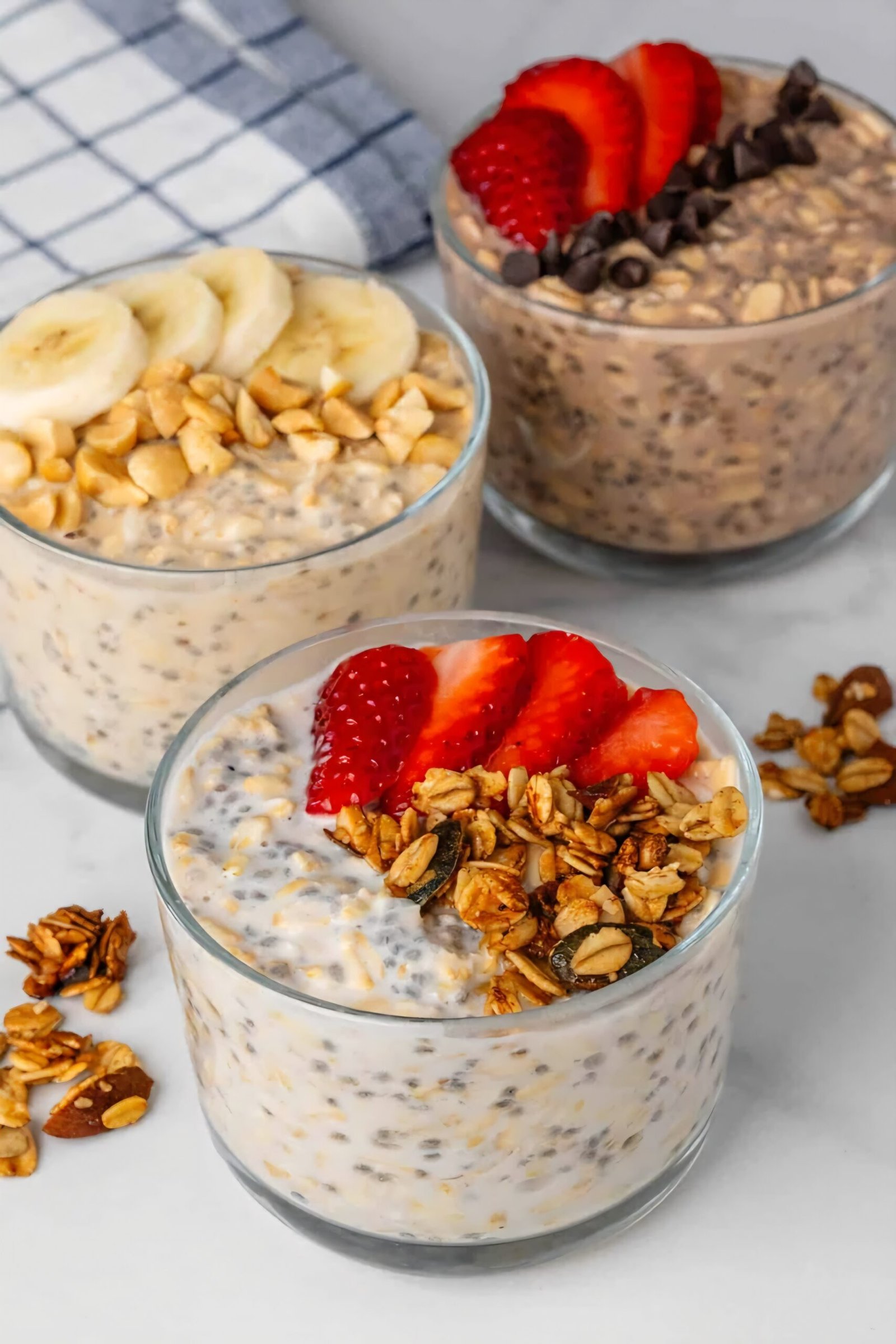
Protein: 25–30g | Time: 5 minutes prep (night before) | Cook required: No
Base formula (prepare the night before):
- 1/2 cup rolled oats
- 3/4 cup milk (regular milk adds 8g protein)
- 1/2 cup (113g) Greek yogurt — the high-protein move most overnight oat recipes skip; adds 10–12g protein and makes them creamy
- 1 scoop protein powder (optional)
- 1 tablespoon chia seeds — adds 3g protein, thickens overnight
- 1 tablespoon maple syrup or honey
- 1/2 teaspoon vanilla extract
Mix in a jar. Cover. Refrigerate overnight. Add toppings in the morning.
Flavour variations:
- Chocolate banana: chocolate protein powder + sliced banana + peanut butter on top
- Strawberry shortcake: vanilla + diced strawberries + granola
- Apple cinnamon: cinnamon + diced apple + almond butter + walnuts
- Mango coconut: coconut milk + frozen mango + toasted coconut + lime zest
Batch prep: Make 5 jars on Sunday. Breakfast handled for the entire week.
8. Turkey and Cheese Roll-Ups with Fruit
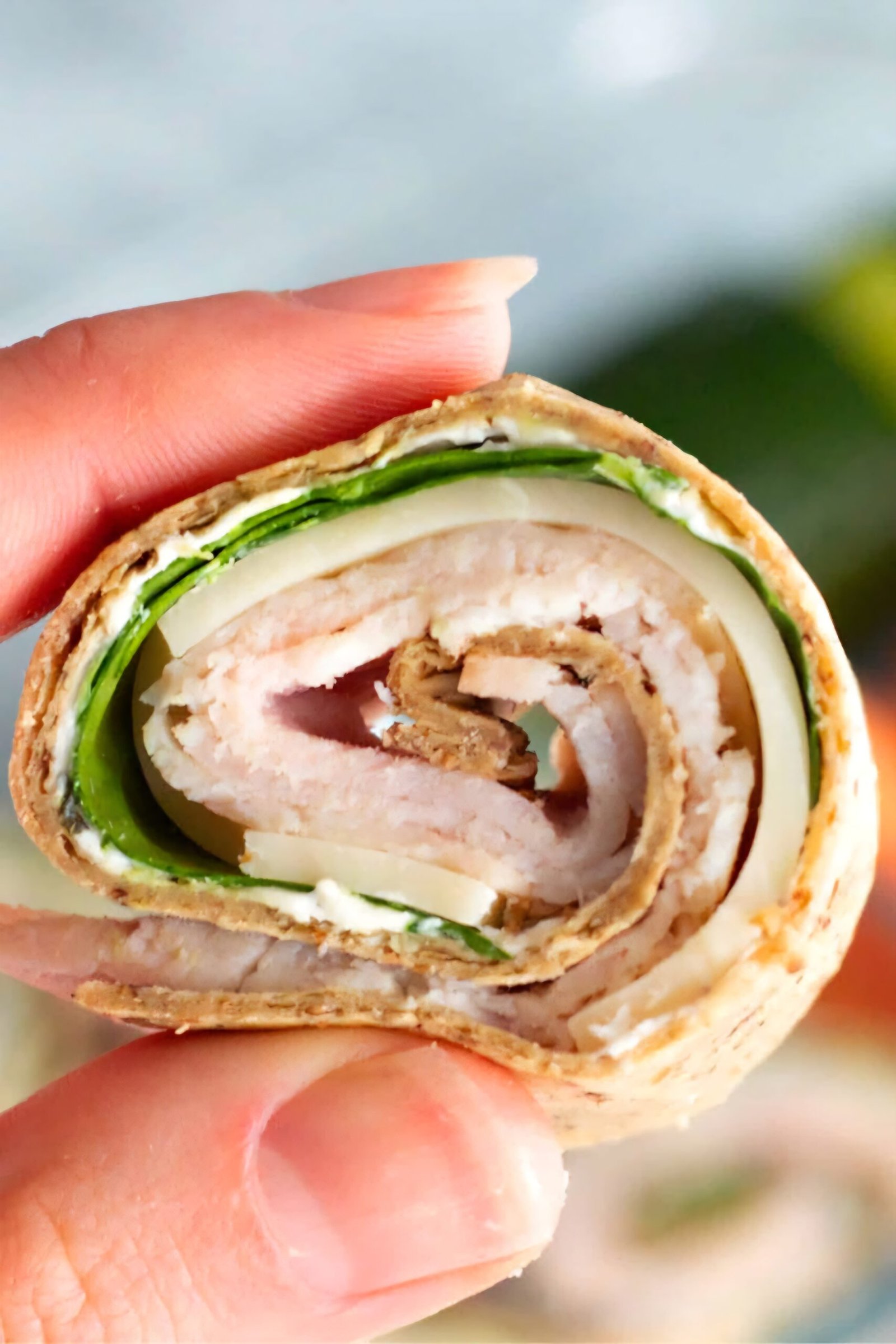
Protein: 25–30g | Time: 3 minutes | Cook required: Zero
Per serving:
- 4–5 slices deli turkey breast (low-sodium, no-nitrate) — approximately 20–22g protein
- 4–5 slices cheese rolled inside the turkey — Swiss or Babybel; adds 4–5g protein
- 1 cup strawberries or apple slices
- 1 tablespoon mustard or hummus for dipping
Why this belongs on the list: Most women eat a breakfast that’s 8–12g protein when they need 25–30g. Turkey and cheese roll-ups hit 28g in literally three minutes with zero cooking, zero blending, zero dishes. On the days when everything else seems like too much — this is your breakfast.
Applegate Naturals Turkey Breast is the cleanest deli turkey in most grocery stores — no artificial nitrates, worth the slight premium for something you eat daily.
The Protein Cheat Sheet: What Hits 25–30g
| Food | Amount | Protein |
|---|---|---|
| Greek yogurt (plain) | 1 cup | 20g |
| Cottage cheese | 1 cup | 25g |
| Protein powder | 1 scoop | 20–25g |
| Smoked salmon | 3oz | 18g |
| Deli turkey | 4 slices | 20g |
| Almond butter | 2 tbsp | 7g |
| Peanut butter | 2 tbsp | 8g |
| Whole milk | 1 cup | 8g |
| Hemp seeds | 3 tbsp | 10g |
| Chia seeds | 2 tbsp | 4g |
| Protein granola | 1/2 cup | 8–10g |
| Dave’s Killer Bread | 2 slices | 10g |
Why “no eggs” actually matters hormonally
Food diversity — eating a wide variety of protein sources across the week — supports gut microbiome diversity, which in turn supports hormone production, immune function, and mood regulation.
Salmon gives you omega-3s that specifically support hormone production and reduce cortisol-driving inflammation. Greek yogurt gives you probiotics and calcium. Turkey gives you tryptophan, which is a precursor to serotonin. Nut butters give you monounsaturated fats that support estrogen metabolism.
Your breakfast is one of the easiest places to add this kind of diversity, because it’s one meal a day where you’re making a deliberate choice rather than reacting to circumstances.
(For the full picture on how what you eat affects your hormones and stress response — here’s the cortisol diet guide that connects your meals to your mood, energy, and desire.)
The Shopping List (Full Week of No-Egg Breakfasts)
Protein: Plain full-fat Greek yogurt (large container), cottage cheese (2 cups), protein powder, smoked salmon (2 packs), deli turkey (1 pack)
Pantry: Rolled oats, chia seeds, hemp seeds, almond butter, honey, vanilla extract, protein granola
Produce: Frozen berries (1 bag), frozen spinach, 1 bunch bananas, strawberries or seasonal fruit
Dairy: Cream cheese, sliced cheese (Swiss or Babybel), whole milk or almond milk
Bread: Dave’s Killer Bread or sourdough
Total grocery addition: approximately $45–55 for a full week. That’s $6.50–7.50 per breakfast — less than a café breakfast and significantly more protein than most people eat before noon.
FAQs: High-Protein Breakfasts Without Eggs
How much protein do I actually need at breakfast?
The research on protein and satiety consistently shows that 25–30g of protein at breakfast is the threshold where appetite suppression, blood sugar stabilisation, and muscle protein synthesis work most effectively. Under 15g — the amount in most traditional breakfasts — doesn’t provide the same benefit.
Can I eat these if I’m not trying to lose weight?
Absolutely. High-protein breakfasts support stable energy, better mood, reduced cravings, and hormone health regardless of weight goals. The benefit of stable blood sugar in the morning is relevant to everyone.
Is Greek yogurt or cottage cheese better for protein?
Cottage cheese has slightly more protein per cup (25g vs 20g for Greek yogurt), but Greek yogurt has more probiotic benefit. Rotate both — they have different amino acid profiles and different gut benefits.
Will a protein smoothie actually keep me full?
Only if you build it correctly. The ingredients that make a smoothie satiating are fat (nut butter, full-fat milk, flaxseed) and fibre (spinach, frozen banana, chia seeds). A smoothie with just protein powder and almond milk will leave you hungry in 90 minutes. The formula in Recipe #3 is built specifically to avoid this.
I have dairy intolerance — which of these work for me?
The smoked salmon toast, the turkey roll-ups, the nut butter toast, and the smoothie (made with non-dairy milk and dairy-free protein powder) all work without dairy. The overnight oats can be made with coconut milk and dairy-free yogurt alternatives.
One Last Thing
The best breakfast is the one you’ll actually eat consistently. And consistent is the only thing that matters.
Pick the one that fits your mornings. The one that takes the least effort on your hardest days. The one that still sounds good when you’re tired and haven’t had coffee yet.
Make that one your default. Add the others as variety when you have more time.
Your mornings will be different. And the difference will show up in your energy, your mood, and your hunger patterns in ways that will genuinely surprise you.
For the full picture on how your breakfast connects to your hormone health and energy levels, here’s the cortisol diet plan that explains what to eat and when.
And if you’re looking for dinners to match — here are 17 easy chicken dinners ready in 30 minutes that make healthy eating feel effortless all week.
Need a full week of meals planned out? Here’s the anti-inflammatory meal prep guide — one Sunday session, meals for the whole week.
Category: Healthy Recipes
© Polia.blog — Written with love and honesty, always.
Related posts:
 🌿 25 Stunning Indoor Plant Decor Ideas to Transform Your Home into a Green Oasis 🌿
 10 Beautifully Designed Interior Spaces Featuring Lush Indoor Plants
🌿 25 Indoor Herb Garden Ideas for Fresh Herbs All Year Round (+ Pro Tips!) 🌟
10 Beautifully Designed Interior Spaces Featuring Lush Indoor Plants
🌿 25 Indoor Herb Garden Ideas for Fresh Herbs All Year Round (+ Pro Tips!) 🌟
 Homemade Happiness: 10 All-Natural Pet Treats Your Fur-Babies Will Love