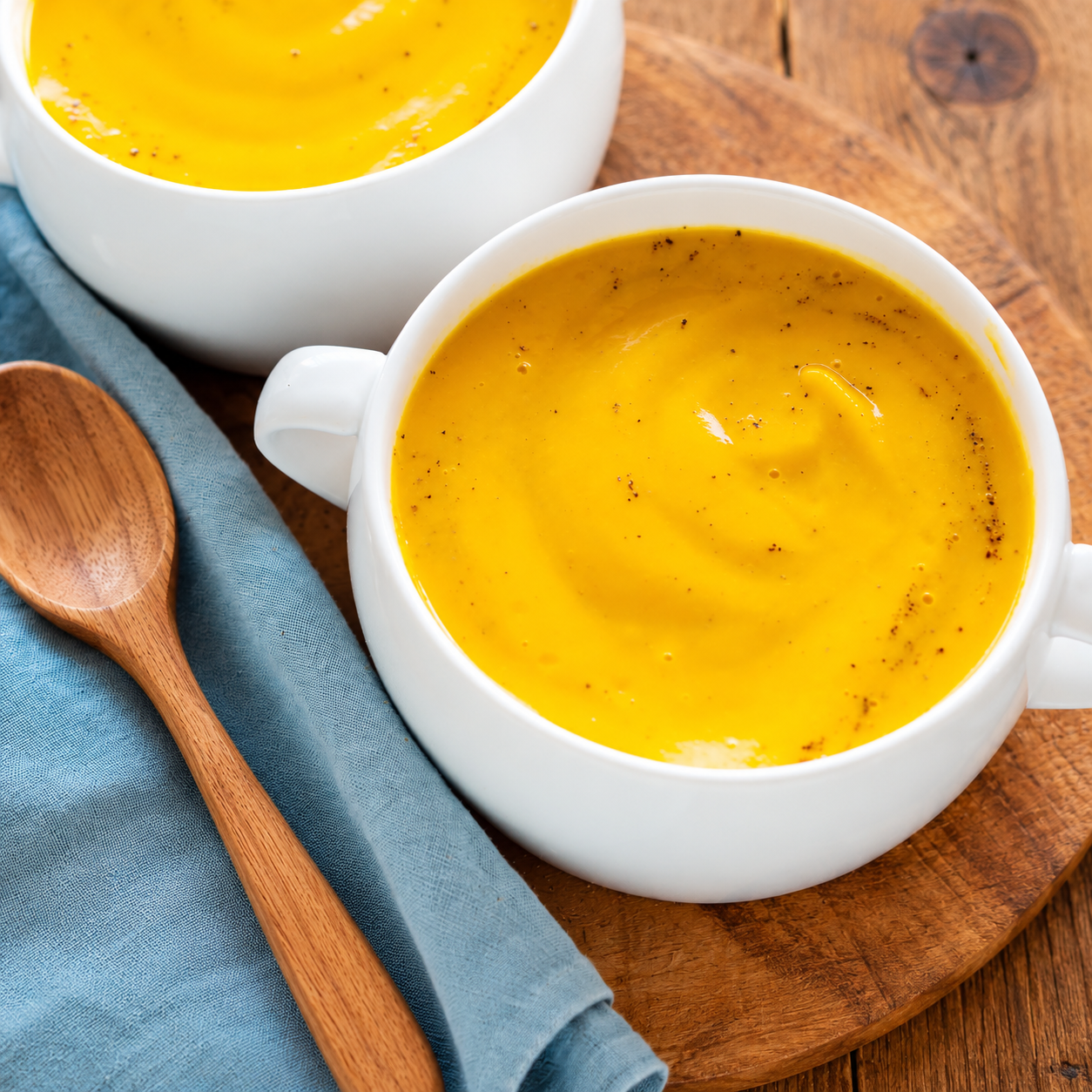
Creamy, Cozy & Easy — Without Heavy Cream
There’s nothing quite like a warm bowl of homemade butternut squash soup on a chilly day.
Thank you for reading this post, don’t forget to subscribe!This roasted version takes the classic soup one step further by roasting the squash until tender and lightly caramelized before blending it with sautéed shallot, garlic, vegetable broth, nutmeg, and a touch of maple syrup.
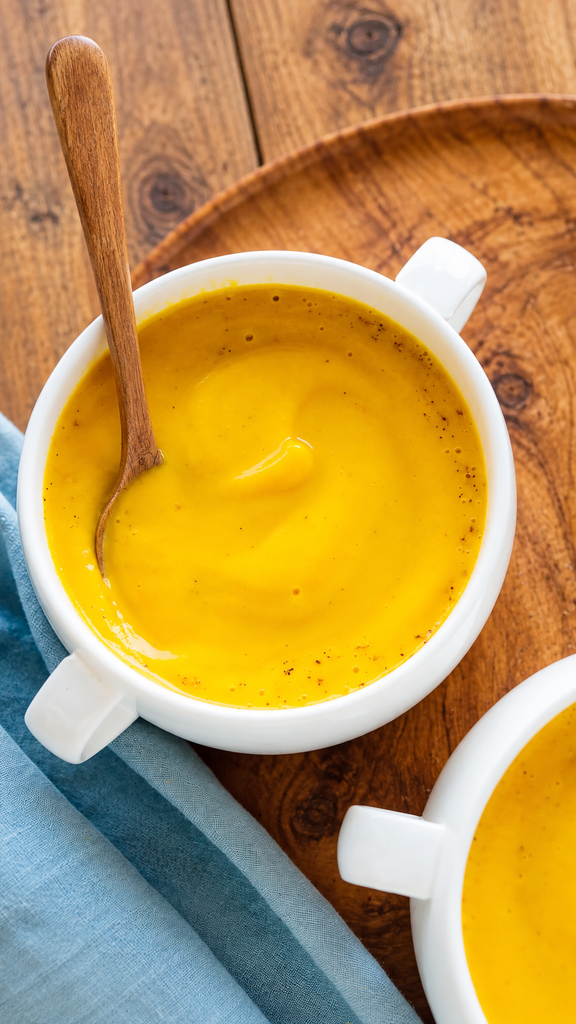
The result is a soup that’s smooth, naturally creamy, deeply flavorful, and wonderfully comforting—without needing heavy cream.
And the best part?
You don’t have to peel the squash before roasting it.
⭐ Why You’ll Love This Recipe
🔥 Roasted for deeper flavor
Roasting concentrates the squash’s natural sweetness and develops delicious caramelized notes.
🥄 Naturally creamy
The roasted squash provides most of the soup’s thick, velvety texture.
🧄 Full of flavor
Garlic and shallot add savory depth, while nutmeg and black pepper balance the sweetness.
⏱️ Simple preparation
There’s no need to peel and chop a hard raw squash before cooking.
🌱 Easy to adapt
Use olive oil instead of butter for a vegan and dairy-free version.
🥕 Recipe at a Glance
| Prep Time | 10 minutes |
| Roasting Time | 40–50 minutes |
| Total Time | About 1 hour 5 minutes |
| Servings | 4 bowls |
| Yield | About 6 cups |
| Course | Soup |
| Method | Roast + Blend |
| Dietary Options | Vegetarian • Vegan/Dairy-Free Adaptable |
🛒 Ingredients
For the Roasted Squash
- 1 large butternut squash — about 3 pounds
- 1 tablespoon olive oil, plus extra for drizzling
- Salt, to taste
- Freshly ground black pepper, to taste
For the Soup
- ½ cup chopped shallot — about 1 large shallot
- 4 cloves garlic, minced or pressed
- 1 teaspoon maple syrup
- ⅛ teaspoon ground nutmeg
- 3 cups vegetable broth, plus up to 1 additional cup as needed
- 1–2 tablespoons butter
- Additional salt and black pepper, to taste
For a vegan soup: replace the butter with olive oil.
The ingredient quantities above follow the supplied recipe.
👩🍳 How to Make Roasted Butternut Squash Soup
Step 1 — Prepare the Squash
Preheat your oven to 425°F (220°C).
Line a rimmed baking sheet with parchment paper.
Cut the butternut squash in half lengthwise and scoop out the seeds and stringy fibers.
Drizzle the cut side lightly with olive oil.
Rub the oil over the flesh, then season with salt and black pepper.
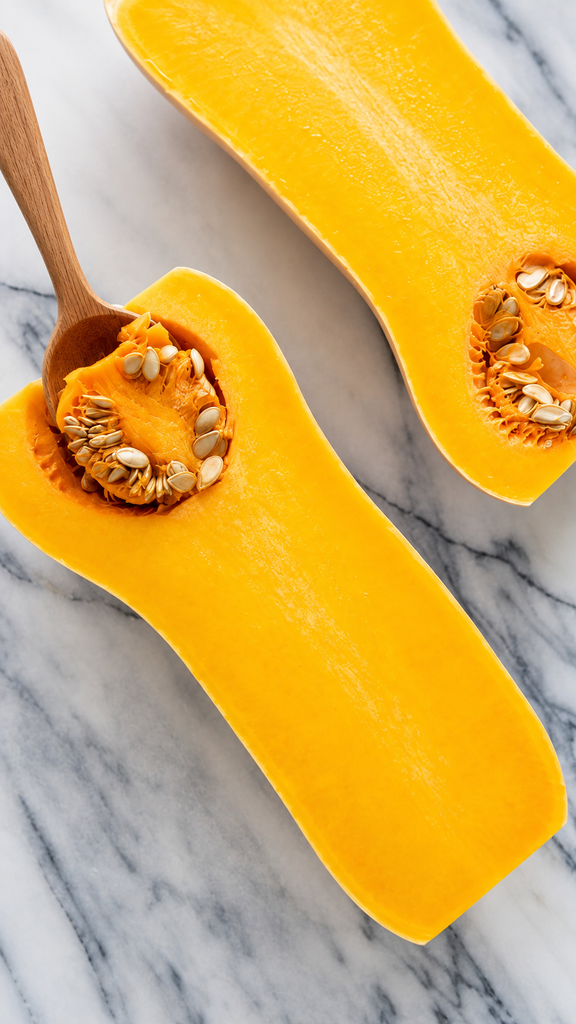
Place the squash cut-side down on the baking sheet.
💡 Why cut-side down?
This helps protect the squash flesh while it roasts and encourages deeper browning and caramelization.
Step 2 — Roast Until Tender
Roast the squash for approximately 40–50 minutes.
Don’t rely only on the timer.
Your squash is ready when:
✔ A fork slides easily into the thickest part.
✔ The flesh is soft enough to scoop.
✔ The edges are beginning to brown.
✔ There are no firm or crunchy areas.
Remove the squash from the oven and let it cool for about 10 minutes, or until it’s comfortable enough to handle.
Tip: Don’t worry if some edges become quite dark. Those roasted areas can add extra flavor.

Step 3 — Sauté the Aromatics
While the squash cools, heat 1 tablespoon olive oil in a large pot or skillet over medium heat.
Add the chopped shallot and 1 teaspoon salt.
Cook for about 3–4 minutes, stirring frequently.
The shallot should become soft and lightly golden around the edges.
Add the minced garlic.
Cook for another 1 minute, just until fragrant.
Be careful not to burn the garlic—it can become bitter.
Step 4 — Scoop Out the Squash
Once the roasted squash is cool enough to handle, use a large spoon to scoop the soft flesh away from the skin.
Discard the skin.
Transfer the roasted squash to a blender.
Add the sautéed shallot and garlic.
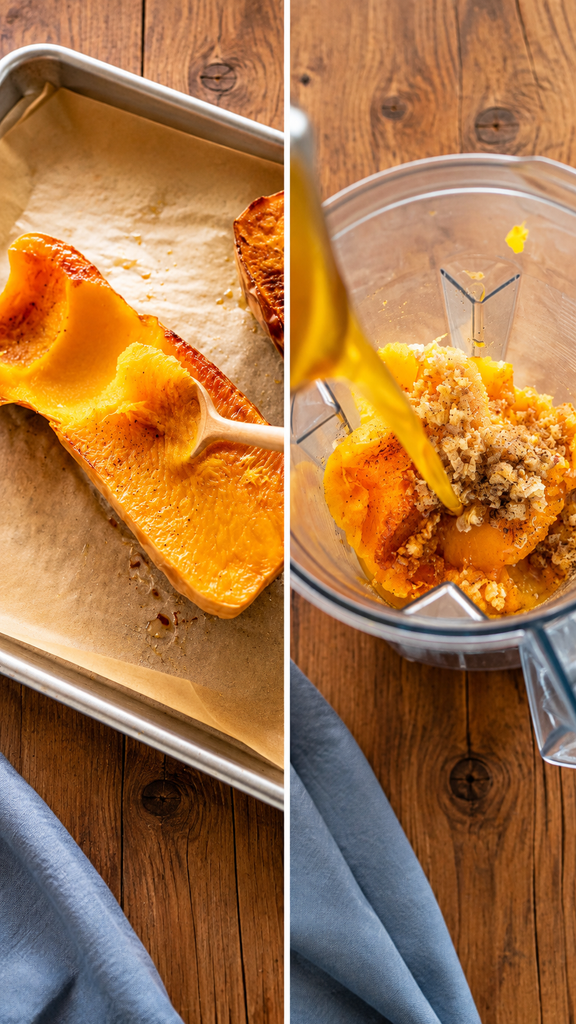
Step 5 — Blend Until Smooth
Add:
- 3 cups vegetable broth
- 1 teaspoon maple syrup
- ⅛ teaspoon nutmeg
- Freshly ground black pepper
Blend until the soup is completely smooth and velvety.
If your blender isn’t large enough, work in batches.
Never fill a blender beyond the manufacturer’s recommended capacity.
⚠️ Blender Safety
Hot liquids can create pressure inside a blender.
Follow your blender manufacturer’s instructions for hot liquids, allow steam to vent as directed, and avoid overfilling.
Step 6 — Adjust the Consistency
Check the soup before adding the remaining broth.
If it’s too thick, gradually add the remaining 1 cup of vegetable broth until you reach your preferred consistency.
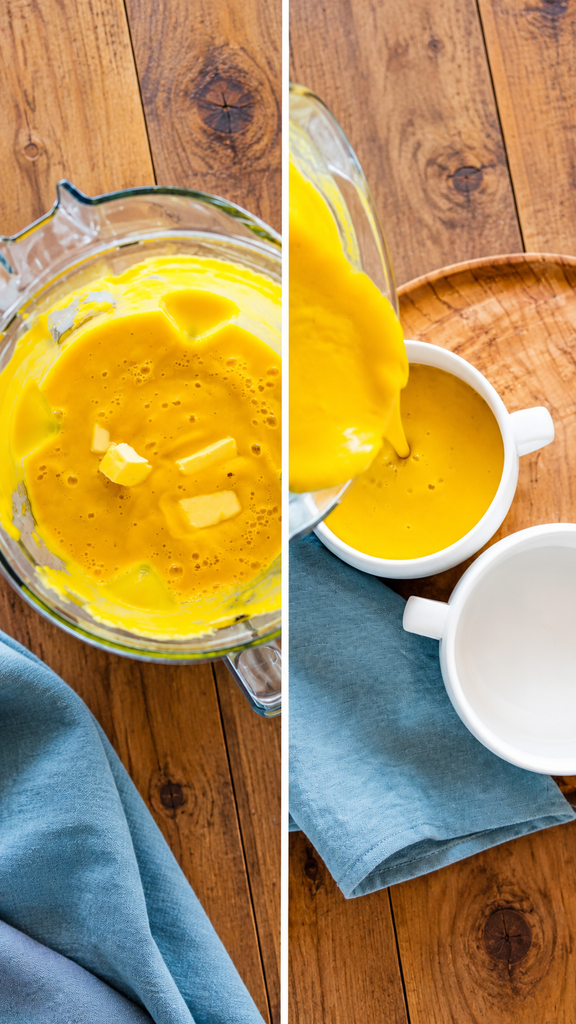
Then add 1–2 tablespoons butter.
Blend again until fully incorporated.
For a vegan or dairy-free version, use olive oil instead.
Taste the soup.
Add more salt or freshly ground black pepper if needed.
Step 7 — Serve
Pour the soup into warm bowls.
Finish with:
✨ Freshly cracked black pepper
✨ A drizzle of olive oil
✨ Toasted pumpkin seeds
✨ Fresh thyme or sage
Serve immediately with crusty bread, a crisp salad, or your favorite sandwich.
🎃 Why Roasting Makes Better Butternut Squash Soup
This is the most important technique in the recipe.
Boiling softens the squash.
Roasting does more.
As the squash cooks at high heat, its natural sugars become more concentrated and the edges develop deeper roasted flavors.
At the same time, the flesh becomes soft enough to blend into a naturally creamy soup.
That’s why this recipe doesn’t need a large amount of cream to create a rich texture.
🥄 7 Tips for Better Butternut Squash Soup
1. Roast the squash properly
Don’t remove it from the oven while the center is still firm.
2. Let the edges brown
A little caramelization adds flavor.
3. Start with 3 cups of broth
You can always add more.
This gives you much better control over the final texture.
4. Don’t burn the garlic
One minute is usually enough.
5. Blend thoroughly
The smoother the soup, the more luxurious the texture.
6. Season at the end
Squash varies naturally in sweetness, so always taste before serving.
7. Finish with butter or olive oil
This small final addition adds richness and improves the mouthfeel.
🥥 Easy Recipe Variations
Vegan Butternut Squash Soup
Replace the butter with olive oil.
That’s it.
The soup is otherwise naturally vegetarian and easy to adapt for a vegan meal.
Extra-Creamy Butternut Squash Soup
Add 2 tablespoons of full-fat coconut milk for a richer texture and subtle coconut flavor.
Spicy Butternut Squash Soup
Add a small pinch of cayenne pepper.
You can also finish each bowl with a drizzle of chili oil.
Herbed Butternut Squash Soup
Finish with fresh:
- Sage
- Thyme
- Black pepper
For an especially flavorful garnish, try crisp sage leaves.
🔪 Can I Use Pre-Cut Butternut Squash?
Yes.
If you don’t want to cut a whole squash, use peeled and cubed butternut squash.
Spread the pieces in a single layer on a baking sheet.
Drizzle lightly with olive oil and season with salt and pepper.
Roast until tender and browned before blending.
The advantage of using a whole squash is simply that you don’t have to peel and cube it first.
❄️ Can I Use Frozen Butternut Squash?
Yes.
Frozen cubed squash can work when fresh squash isn’t available.
For a flavor closer to this roasted version, roast the frozen squash until tender and browned before blending.
🥣 Don’t Have a Blender?
No problem.
Immersion blender
Keep the cooked ingredients in a suitable pot and blend directly until smooth.
Countertop blender
Blend the ingredients in batches while following your blender’s instructions for hot liquids.
A high-powered blender can help produce an especially smooth texture.
🛠️ Butternut Squash Soup Troubleshooting
My soup is too thick.
Add vegetable broth gradually—about ¼ cup at a time—until you reach the consistency you want.
My soup is too thin.
Simmer it gently in a pot, uncovered, until some of the excess liquid evaporates.
Next time, start with less broth and add more gradually.
My soup is too sweet.
Butternut squash can naturally vary in sweetness.
First, taste and adjust the salt.
Then add more black pepper if needed.
A small amount of lemon juice can also provide contrast.
If you’re making the recipe again, reduce or omit the maple syrup.
My soup tastes bland.
Start with the salt.
Then consider the roasting.
If the squash wasn’t roasted enough, it may not have developed the deeper flavor this recipe is designed around.
The supplied recipe also recommends adjusting salt and pepper and optionally using fresh lemon juice when the flavor needs more balance.
My soup isn’t smooth enough.
Blend longer.
If necessary, use a high-powered blender or blend for at least about a minute on high, following your blender’s safety instructions.
My soup tastes bitter.
Check the garlic.
Burned garlic can make the finished soup noticeably bitter.
Also check whether the squash has become excessively burnt during roasting.
🍞 What to Serve With Butternut Squash Soup
This soup works beautifully as either a starter or a complete light meal.
For a cozy dinner
Serve with:
- Grilled cheese
- Crusty bread
- Garlic bread
For lunch
Pair it with a simple autumn salad.
For Thanksgiving or another holiday meal
Serve smaller portions as a first course.
For meal prep
Divide the soup into individual containers for easy lunches during the week.
These pairings are consistent with the serving suggestions in the supplied recipe.
🧊 How to Store Butternut Squash Soup
Let the soup cool appropriately before transferring it to an airtight container.
Refrigerator
Up to 4 days.
Freezer
Up to 3 months.
Thaw overnight in the refrigerator before reheating.
Reheating
Warm gently on the stovetop, stirring occasionally.
If the soup has thickened in the refrigerator, add a splash of vegetable broth while reheating.
⏰ Can I Make This Soup Ahead?
Absolutely.
Prepare the soup completely, refrigerate it, and gently reheat it when you’re ready to serve.
This makes it particularly convenient for:
- Weeknight meal prep
- Holiday dinners
- Weekend cooking
- Packed lunches
🍲 Can I Make This in an Instant Pot?
Yes.
The supplied recipe’s Instant Pot method sautés the aromatics first, then adds peeled and cubed squash, broth, and seasonings.
It specifies 10 minutes of pressure cooking, followed by blending.
Follow your specific pressure cooker’s safety and operating instructions.
❓ Frequently Asked Questions
Does butternut squash soup need heavy cream?
No.
The roasted squash naturally provides a thick, creamy texture. Butter or olive oil adds additional richness.
Is this butternut squash soup vegan?
It can be.
Simply replace the butter with olive oil and use a suitable vegetable broth.
Can I freeze butternut squash soup?
Yes.
The supplied recipe recommends freezing it for up to 3 months.
How do I thicken butternut squash soup?
Start with less broth, or simmer the finished soup gently to reduce excess liquid.
How do I thin butternut squash soup?
Add vegetable broth gradually until it reaches your preferred consistency.
Can I use frozen butternut squash?
Yes.
Roast it until tender and browned before blending for a more roasted flavor.
How do I make butternut squash soup smoother?
Blend thoroughly until completely smooth.
A high-powered blender can be particularly helpful.
Can I make butternut squash soup without butter?
Yes.
Use olive oil instead for a dairy-free version.
Can children eat butternut squash soup?
The supplied recipe describes this soup as kid-friendly because of the squash’s natural sweetness. For children who prefer mild flavors, reduce or omit the black pepper.
📌 Recipe Notes
For deeper flavor:
Don’t rush the roasting stage. Browning is part of what makes this soup special.
For a thicker soup:
Use less broth.
For a thinner soup:
Add broth gradually after blending.
For vegan soup:
Use olive oil instead of butter.
For extra richness:
Try the coconut milk variation.
For a spicy version:
Add cayenne or chili oil.
🥣 Final Thoughts
This roasted butternut squash soup proves that a comforting homemade soup doesn’t need a complicated ingredient list.
The real secret is the roasting technique.
Roast the squash until tender and caramelized.
Sauté the shallot and garlic until fragrant.
Blend everything until smooth.
Then adjust the broth and finish with butter or olive oil.
The result is a bowl of velvety, deeply flavored butternut squash soup that’s cozy enough for a weeknight and elegant enough for a holiday table.
Serve it with crusty bread, toasted pumpkin seeds, or a simple salad—and enjoy every warm spoonful.
Save this recipe for the next time you’re craving an easy, cozy bowl of homemade soup.
Related posts:
 Creamy Tuscan Salmon: Your New 20-Minute Weeknight Hero
 Crispy Baked Garlic Parmesan Potato Wedges – Easy Side Dish
 Creamy Rotisserie Chicken and Mushroom Soup: The Ultimate 30-Minute Comfort Meal
 The Ultimate Truffle Fries Recipe with Chimichurri Steak Bites: Your Easy Guide to a Gourmet Steakhouse Meal at Home