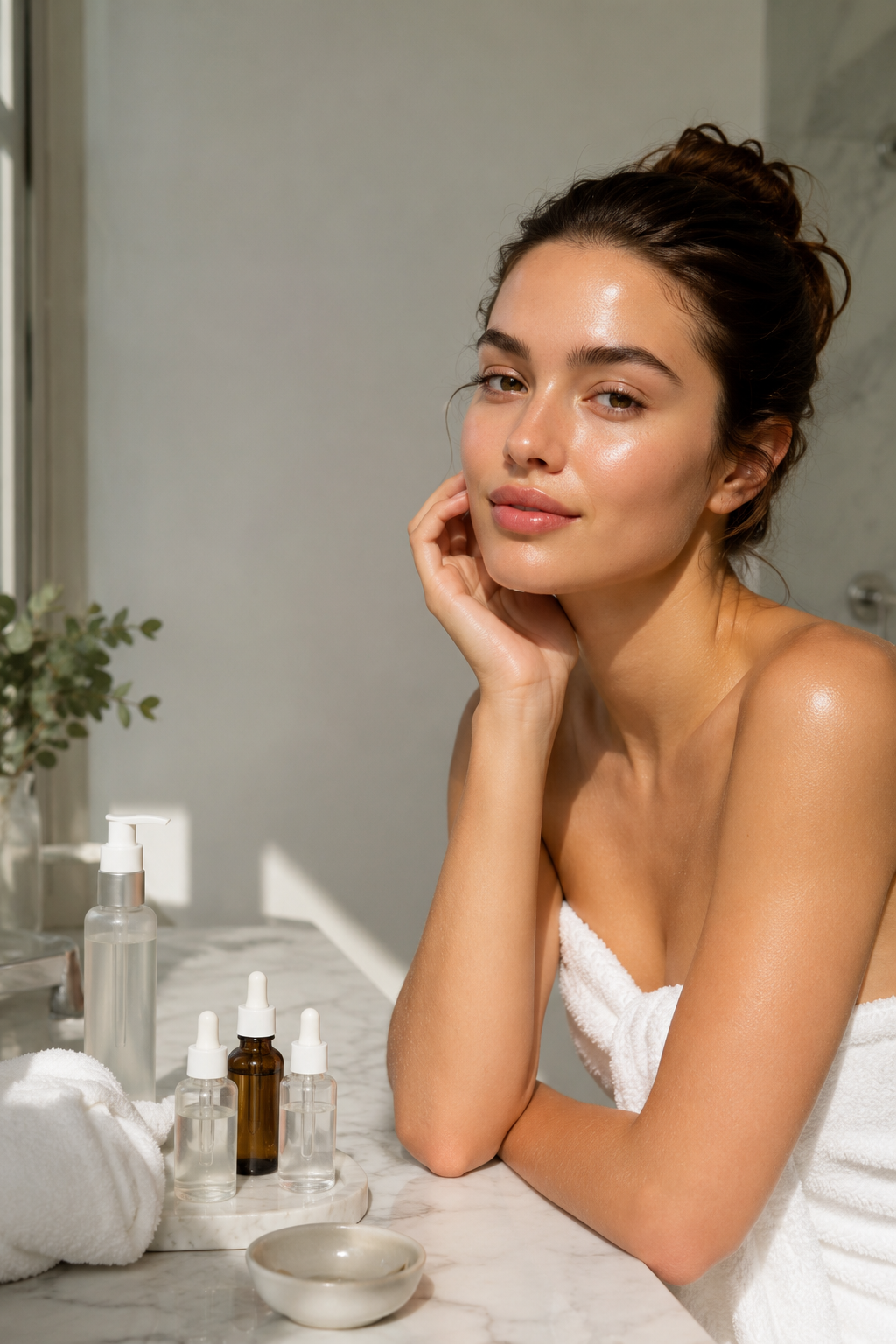
You probably don’t need another serum. You may just need a better routine.
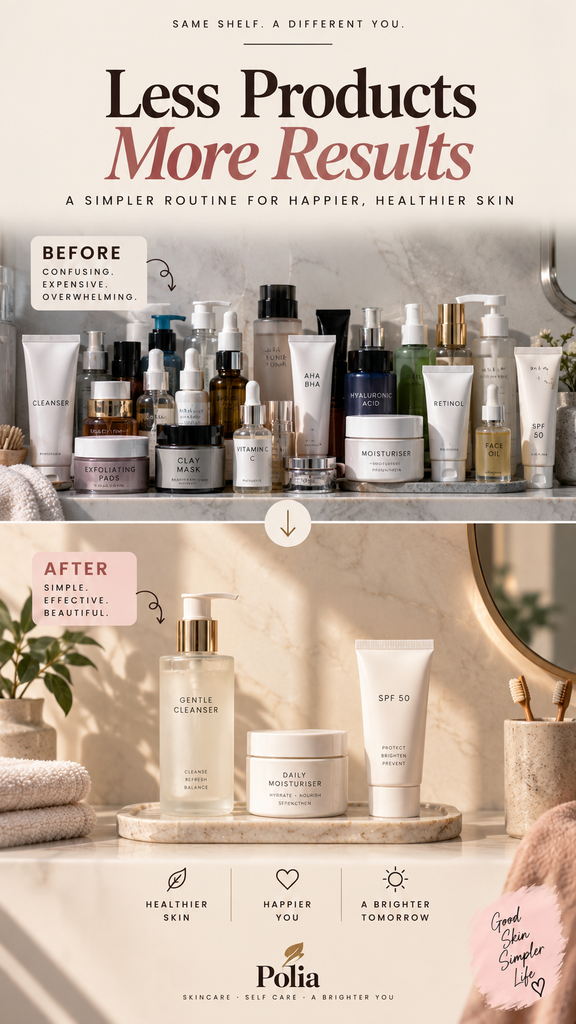
Thank you for reading this post, don’t forget to subscribe!If your bathroom shelf is overflowing with cleansers, toners, essences, serums, masks, and treatments, you’re not alone. The minimalist skincare routine movement — also called skinimalism — takes the opposite approach: start with the basics, make every product earn its place, and add targeted treatments only when there’s a specific reason.
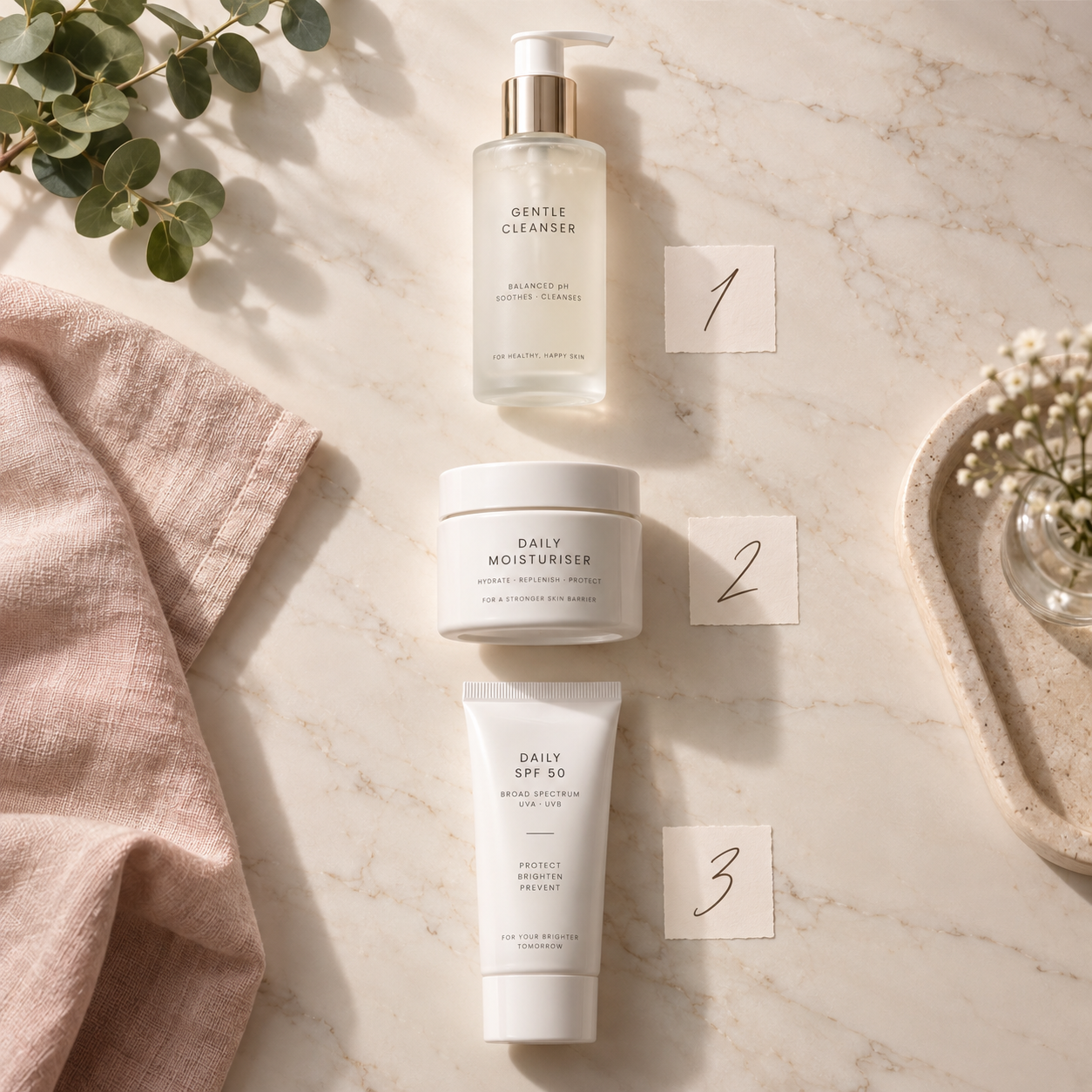
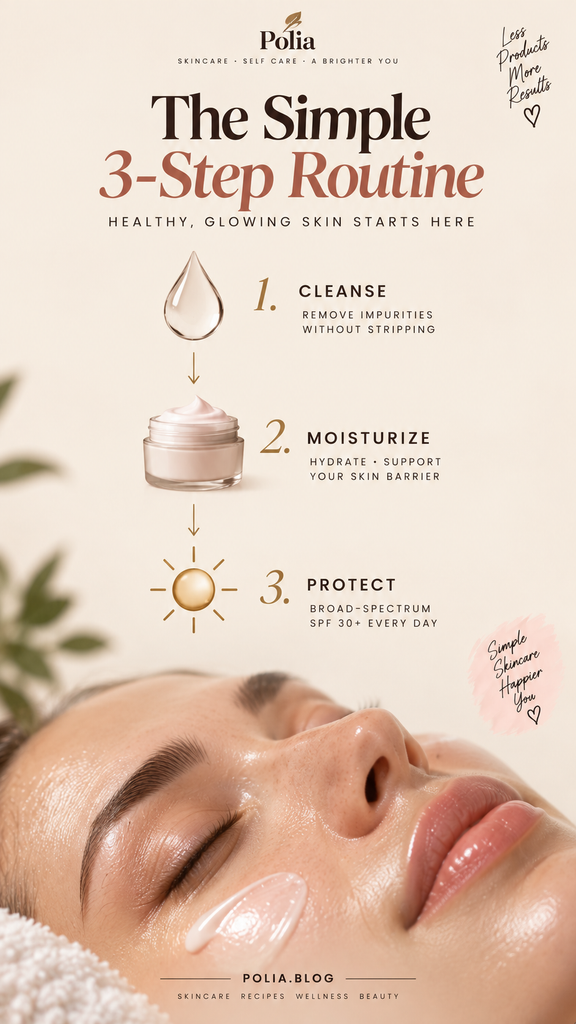
For many people, that foundation can be as simple as:
Cleanse → Moisturize → Protect
This guide walks you through the exact steps, which products are genuinely necessary, which are optional, and how to build a routine that works for your skin type — without the overwhelm.
Why this works:
- Contains the exact keyphrase “minimalist skincare routine” in the first 100 words
- Gives the reader the answer immediately
- Creates a curiosity gap (“which are optional”)
- Sets up the rest of the article
Your Skinimalist Routine at a Glance
☀️ Morning
- Cleanser — if needed
- Moisturizer — if your skin needs it
- Broad-spectrum SPF 30+
🌙 Evening
- Gentle cleanser
- Treatment — optional
- Moisturizer
The rule: Start simple. Add treatments only when you have a specific reason.
In This Guide
- What Is Skinimalism 2.0?
- Why Skinimalism Is Trending
- How Many Skincare Steps Do You Actually Need?
- The 3-Step Foundation
- Build Your Routine by Skin Type
- Which Products Are Actually Optional?
- Multi-Functional Products
- How to Decide Whether You Need a New Product
- Common Skinimalism Mistakes
- When to Simplify Your Routine
- How Long Do Skincare Results Take?
- Budget-Friendly Routine
- FAQs
- Sources & Evidence
What Is Skinimalism 2.0?
Skinimalism 2.0 is not about deprivation. It is about intention.
It is the shift from “how many products can I layer” to “which products actually earn their place on my shelf.” According to Mintel, consumers are actively seeking multi-functional skincare — products that deliver multiple benefits in one step without compromising results.
This is not a niche trend. It is a behaviour shift. Gen Z and Millennial shoppers are gravitating toward streamlined routines and clearer brand communication. They want fewer steps, clearer roles, greater efficiency, and products that fit into real life.
The first wave of skinimalism (circa 2021) was a backlash against the 12-step routine. Skinimalism 2.0 is smarter. It is not anti-product. It is pro-efficiency. It is about using the right ingredients in the right formulations — not just using fewer things.
Why Skinimalism Is Trending Now
1. Consumers are overwhelmed.
With so many new ingredients, products, and formulas on the market, it is easy to get lost. Where do you start — and where do you end?
2. Over-exfoliation has caused widespread barrier damage.
Many people have “trauma from over-exfoliating” with harsh scrubs. The result is sensitised, reactive skin that cannot tolerate the very actives they were chasing. Skinimalism is the recovery.
3. Time and money matter.
A 12-step skincare routine takes a lot of time and money. Buying that many products is not great for your wallet or the planet. Simplifying the process saves money and strengthens the skin barrier in one go.
4. The science is clear.
According to Professor Caitriona Ryan, Consultant Dermatologist, “Our skin is such a sophisticated organ, it can pretty much look after itself when it comes to cell turnover and keeping hydration in. The one thing it can’t do by itself is protect against UV rays.”
The ten and twelve-step routines now common among even very young skincare users are a recent phenomenon, driven by social media rather than science.
How Many Skincare Steps Do You Actually Need?
For many people, a simple routine built around cleansing, moisturizing, and sun protection is a strong starting point.
According to the American Academy of Dermatology, adopting a simple, three-step approach that includes cleansing, moisturizing, and protecting your skin can help reduce skin care costs while keeping your skin healthy. The AAD also notes that using several different products can be costly, irritate your skin, and make signs of aging more noticeable.
A dermatologist-approved routine is:
Morning: Cleanse → Moisturise (if needed) → SPF
Evening: Cleanse → Retinoid (optional) → Moisturise
Everything else is optional, and much of it may not be scientifically necessary for your skin.
According to board-certified dermatologist Dr. Ugonabo, a skinimalist routine should include just three products: a gentle cleanser, a barrier-safe moisturiser, and a sunscreen that is SPF 30 or higher. The AAD also recommends moisturizing your face, body, and lips — even if you have oily skin.
The 3-Step Foundation
Step 1: Gentle Cleanser
What it does: Removes dirt, sunscreen, and excess oil without stripping the skin.
Why it matters: A compromised skin barrier leads to increased sensitivity, flaky skin, and delayed healing — often from using too many products or incorrectly layering too many actives.
What to look for:
- Non-foaming or low-foam formula
- pH-balanced (around 5.0–6.0)
- Fragrance-free
- Ceramides or glycerin for hydration
Product picks:
- Budget: Vanicream Gentle Facial Cleanser — minimal ingredients, no stripping
- Mid-range: CeraVe Hydrating Facial Cleanser — ceramide-rich, non-foaming
- Premium: La Roche-Posay Toleriane Hydrating Gentle Cleanser
Note: Prices vary. Check current pricing at your preferred retailer.
Step 2: Moisturiser (Barrier-Safe)
What it does: Seals in hydration, supports the skin barrier, and prevents water loss.
Why it matters: When the skin barrier is compromised, you will notice increased sensitivity, flaking, and delayed healing. A barrier-safe moisturiser rebuilds the lipid mortar that keeps skin resilient.
What to look for:
- Barrier-supportive ingredients such as ceramides, fatty acids, glycerin, and/or other moisturizing ingredients appropriate for your skin type
- Niacinamide (2–5%)
- Panthenol (provitamin B5)
- Squalane or glycerin
Product picks:
- Budget: CeraVe Moisturizing Cream — ceramides, cholesterol, petrolatum
- Mid-range: Neutrogena Hydro Boost Water Gel — lightweight, ideal under SPF
- Premium: La Roche-Posay Toleriane Double Repair Moisturizer
Note: Prices vary. Check current pricing at your preferred retailer.
Step 3: Broad-Spectrum SPF 30+
What it does: Protects against UV damage — the primary driver of premature ageing, hyperpigmentation, and dullness.
Why it matters: The AAD recommends using sunscreen to help prevent wrinkles, age spots, and skin cancer. Make sure the sunscreen is broad-spectrum and has an SPF of 30 or higher. Sunscreen should be applied after facial moisturizer as the last step in your daytime skincare routine.
What to look for:
- SPF 30 or higher
- Broad-spectrum UVA/UVB protection
- Water resistance when appropriate for outdoor activity
- Apply after other skincare products
- Reapply every two hours, or after swimming or sweating
Product picks:
- Budget: Neutrogena Ultra Sheer Dry-Touch SPF 55
- Mid-range: La Roche-Posay Anthelios Melt-in Milk SPF 60
- Premium: EltaMD UV Clear SPF 46
Note: Prices vary. Check current pricing at your preferred retailer.
Build Your Routine by Skin Type
Dry Skin
Morning: Gentle cleanser → Richer moisturizer → SPF
Night: Gentle cleanser → Moisturizer
Oily Skin
Oily skin can still be dehydrated. Oil describes sebum production, while dehydration refers to insufficient water in the skin. Because harsh cleansing can irritate oily skin, a gentle cleanser and lightweight moisturizer can still be useful.
Morning: Gentle cleanser → Lightweight moisturizer if needed → SPF
Night: Gentle cleanser → Lightweight moisturizer
Combination Skin
Morning: Gentle cleanser → Lightweight moisturizer → SPF
Night: Gentle cleanser → Lightweight moisturizer
Sensitive Skin
Morning: Gentle cleanser → Fragrance-free moisturizer → SPF
Night: Gentle cleanser → Moisturizer
Acne-Prone Skin
Keep the basic routine simple and introduce treatment products according to the specific concern. Gentle cleansing is preferable to aggressively stripping oil.
Which Products Are Actually Optional?
| Step | Necessary? | Notes |
|---|---|---|
| Cleanser | ✅ Yes | Non-negotiable. Gentle formula. |
| Toner | ⚠️ Optional | Hydrating toners can replace serum steps. |
| Vitamin C Serum | ⚠️ Optional | Best for brightening and antioxidant protection. |
| Retinol | ⚠️ Optional | Best for anti-ageing, texture, and acne. Night only. |
| Eye Cream | ⚠️ Optional | A pea-sized amount of moisturiser works as a substitute. |
| Moisturiser | ✅ Yes (most people) | Essential for barrier support. Oily skin may skip in the morning. |
| SPF | ✅ Yes | Always. Every day. |
| Face Oil | ❌ Not necessary | Occlusive, not hydrating. Optional for very dry skin. |
| Essence | ❌ Not necessary | Hydrating toners can do the same job. |
| Sheet Masks | ❌ Not necessary | Nice-to-have, not essential. |
| Exfoliants | ⚠️ Optional | Choose frequency based on skin type and product instructions. |
Multi-Functional Products: What They Replace
The core of Skinimalism 2.0 is the multi-functional product — a single formulation that hydrates, treats, and protects simultaneously.
| Product Type | What It Replaces |
|---|---|
| Tinted SPF | Moisturiser + SPF + light coverage |
| AHA Cleanser | Cleanser + exfoliant |
| Vitamin C + Niacinamide Serum | Two separate serums |
| Retinol + Ceramide Moisturiser | Treatment + moisturiser |
| Hydrating Toner | Essence + serum + toner |
How to Decide Whether You Need a New Product
Before adding any new product, ask:
- What problem am I trying to solve? If there isn’t a specific problem → don’t add it.
- Do I already have something that does this? If yes → you may not need another product.
- Is my basic routine working? If not → fix the foundation first.
- Could this irritate my skin? If yes → introduce it cautiously.
- Can I realistically use it consistently? If no → it probably doesn’t belong in your routine.
Common Skinimalism Mistakes
1. Adding products because you’re bored.
If your routine is working, do not add anything. The temptation to “optimise” is the enemy of consistency.
2. Using multi-functional products that do nothing well.
A product that claims to do 10 things often does none of them effectively. Look for products that do 2–3 things excellently.
3. Skipping SPF because it’s cloudy.
UV damage happens every day, through windows, through clouds, year-round. The AAD recommends sun protection as part of your daily skin care.
4. Reintroducing actives too quickly.
Introduce one new active at a time. This makes it easier to tell how your skin responds and identify the cause if irritation develops.
5. Confusing “minimalist” with “no skincare.”
Skinimalism is not about using nothing. It is about using the right things — and giving them time to work.
When to Simplify Your Routine
🚨 Simplify your routine if:
- Your skin suddenly becomes very sensitive
- Products sting when they normally don’t
- You’re experiencing persistent irritation
- You’re adding multiple actives at once
- You can’t tell which product is causing the reaction
Stop adding new actives and consider speaking with a dermatologist if symptoms persist or worsen.
If your skin is currently irritated, stinging, or unusually sensitive, simplify your routine first. Our skin barrier repair routine guide walks through the recovery process step by step.
Important Retinoid Note
Retinoids can cause irritation, particularly when first introduced. Start gradually and use moisturizer to help reduce irritation.
Retinoids should not be used during pregnancy. The American Academy of Dermatology advises that pregnant people should avoid any products that contain retinoids. Anyone who is pregnant, trying to become pregnant, or unsure about an ingredient should discuss their routine with a healthcare professional.
When discussing the broader category of vitamin A derivatives, use the term retinoid. When recommending a specific over-the-counter ingredient, use retinol.
How Long Do Skincare Results Take?
| Goal | What to Expect |
|---|---|
| Hydration | Often noticeable sooner, depending on the product |
| Texture | Usually requires consistent use over time |
| Dark spots | Often takes several weeks or longer |
| Retinoid results | Usually require consistent long-term use |
Timelines vary significantly by ingredient, product, skin condition, and consistency. Give any new routine at least 8 weeks before evaluating.
Budget-Friendly Routine
Under $50 Complete Routine
- Cleanser: Vanicream Gentle Facial Cleanser
- Moisturiser: CeraVe Moisturizing Cream
- SPF: Neutrogena Ultra Sheer Dry-Touch SPF 55
Under $100 — Elevated Version
- Cleanser: La Roche-Posay Toleriane Hydrating Gentle Cleanser
- Moisturiser: La Roche-Posay Toleriane Double Repair Moisturizer
- SPF: EltaMD UV Clear SPF 46
Note: Prices vary. Check current pricing at your preferred retailer.
Affiliate Disclosure: This article may contain affiliate links. If you purchase through these links, we may earn a small commission at no extra cost to you.
Frequently Asked Questions
What is skinimalism?
Skinimalism is a minimalist approach to skincare — fewer products, smarter formulations, and a focus on what actually works. It is about reducing the number of steps while improving the quality of each one.
How many skincare steps do I actually need?
For many people, a simple routine built around cleansing, moisturizing, and sun protection is a strong starting point. The AAD supports this three-step approach while emphasizing adaptation to skin type and circumstances.
Can I use one product for multiple skincare steps?
Yes. Multi-functional products are the core of Skinimalism 2.0. A tinted SPF can replace moisturiser and sunscreen. An AHA cleanser can replace a separate exfoliant.
Is skinimalism suitable for oily skin?
Yes. Oily skin can still be dehydrated. Because harsh cleansing can irritate oily skin, a gentle cleanser and lightweight moisturizer can still be useful. The AAD recommends moisturizing even if you have oily skin.
Do I need a serum if I’m following a minimalist routine?
Not necessarily. If you have a specific concern (brightening, anti-ageing), a serum can help. If your skin is healthy and balanced, cleanser + moisturiser + SPF is often enough.
How long until I see results from a minimalist routine?
Hydration is often noticeable sooner. Texture, dark spots, and retinoid results usually require consistent use over time. Give any new routine at least 8 weeks before evaluating.
Sources & Evidence
- American Academy of Dermatology — Skin care on a budget
- American Academy of Dermatology — How to safely exfoliate at home
- American Academy of Dermatology — Pregnancy and retinoid guidance
- American Academy of Dermatology — Sunscreen application and SPF 30+ recommendation
- Journal of the American Academy of Dermatology — Optimal ratios of topical stratum corneum lipids
- CeraVe — Sunscreen application order guidance
Last updated: September 20, 2026
Continue Your Skincare Routine
Start here:
→ Skinimalism 2.0 (this article)
Next:
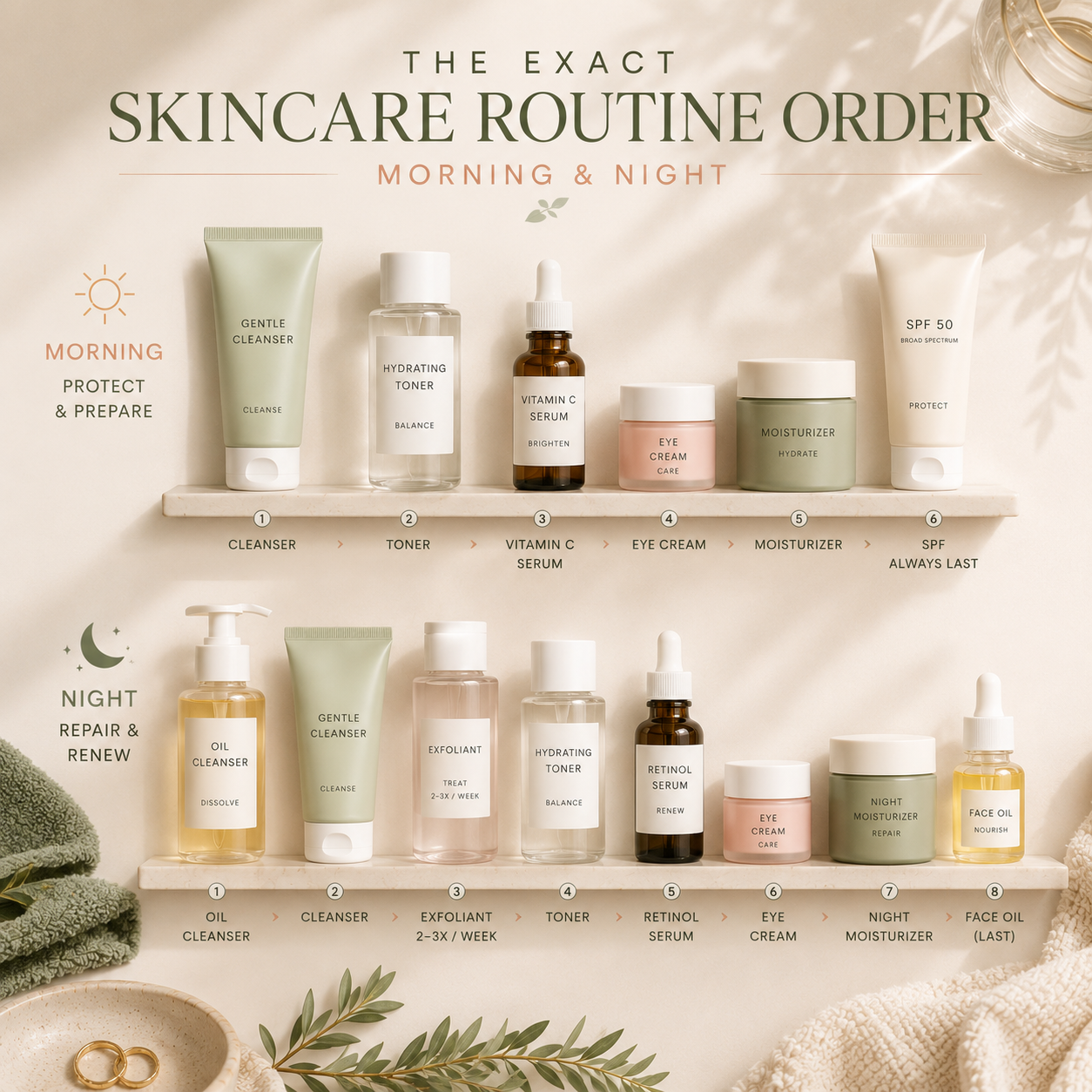
→ Skincare Routine Order
If your barrier is irritated:
→ Skin Barrier Repair Routine
Want glass skin:
→ Glass Skin for Beginners
Want a more advanced routine:
→ 7-Step Glass Skin Routine
Exploring new ingredients:
→ PDRN Skincare Guide
The Bottom Line
Skinimalism 2.0 is not a trend. It is a correction.
After years of over-complication, the skincare industry is finally catching up to what dermatologists have said all along: for many people, a simple routine built around cleansing, moisturizing, and sun protection is a strong foundation.
Cleanse. Moisturise. Protect.
Everything else is optional — and much of it may not be necessary for your skin.
If you are overwhelmed by your routine — if your skin is reactive, irritated, or simply not responding — strip it back. Give your barrier two to four weeks to stabilise. Then, and only then, add one thing at a time.
Less is more. But only when “less” is done right.
This article is for informational purposes and is not a substitute for professional medical advice. If you have persistent skin concerns, consult a board-certified dermatologist.
Related posts:
 Your Ultimate Guide to Stunning Hairstyles: From Classic to Cutting-Edge
 ✨ 17 Balayage Ideas for Long, Layered Brunette Hair with Face Framing ✨
 🌿 The Ultimate Guide to Hair Growth: Proven Tips, Foods & Natural Remedies for Faster, Healthier Hair
 The Exact Skincare Routine Order for Morning and Night (Finally Explained Clearly)