
By Polia · Wellness & Intimacy
Thank you for reading this post, don’t forget to subscribe!You used to want it.
Not just tolerate it, not just go along with it — actually want it. Look forward to it. Feel that pull toward someone that made everything else feel a little less serious.
And now? It’s just… not there. Or it shows up occasionally, halfheartedly, then disappears before anything happens. And you can’t quite explain it because nothing dramatic changed. Your relationship is fine. You’re not sick. You’re not on new medication. You’re just — flat, in a way you don’t totally understand.
Here’s what nobody told you to check: your cortisol.
Cortisol is your primary stress hormone — the one your body releases when it perceives a threat, whether that threat is a lion chasing you or a full inbox on a Monday morning. And in small, well-timed doses, cortisol is essential. It gets you up in the morning, helps you focus, keeps your energy regulated.
But when cortisol is chronically elevated — which, for most women living modern lives, it is — it doesn’t just make you feel stressed. It quietly dismantles your hormone balance in ways that affect everything from your sleep to your metabolism to, yes, your desire.
The connection between stress and libido is real, it’s physiological, and it’s one of the most underdiagnosed reasons women lose interest in sex. Not because something is broken. Because your body is doing exactly what it was designed to do — just in a context it was never designed for.
Let’s talk about what’s actually happening. And more importantly, what you can do about it.
What cortisol actually does to your hormones
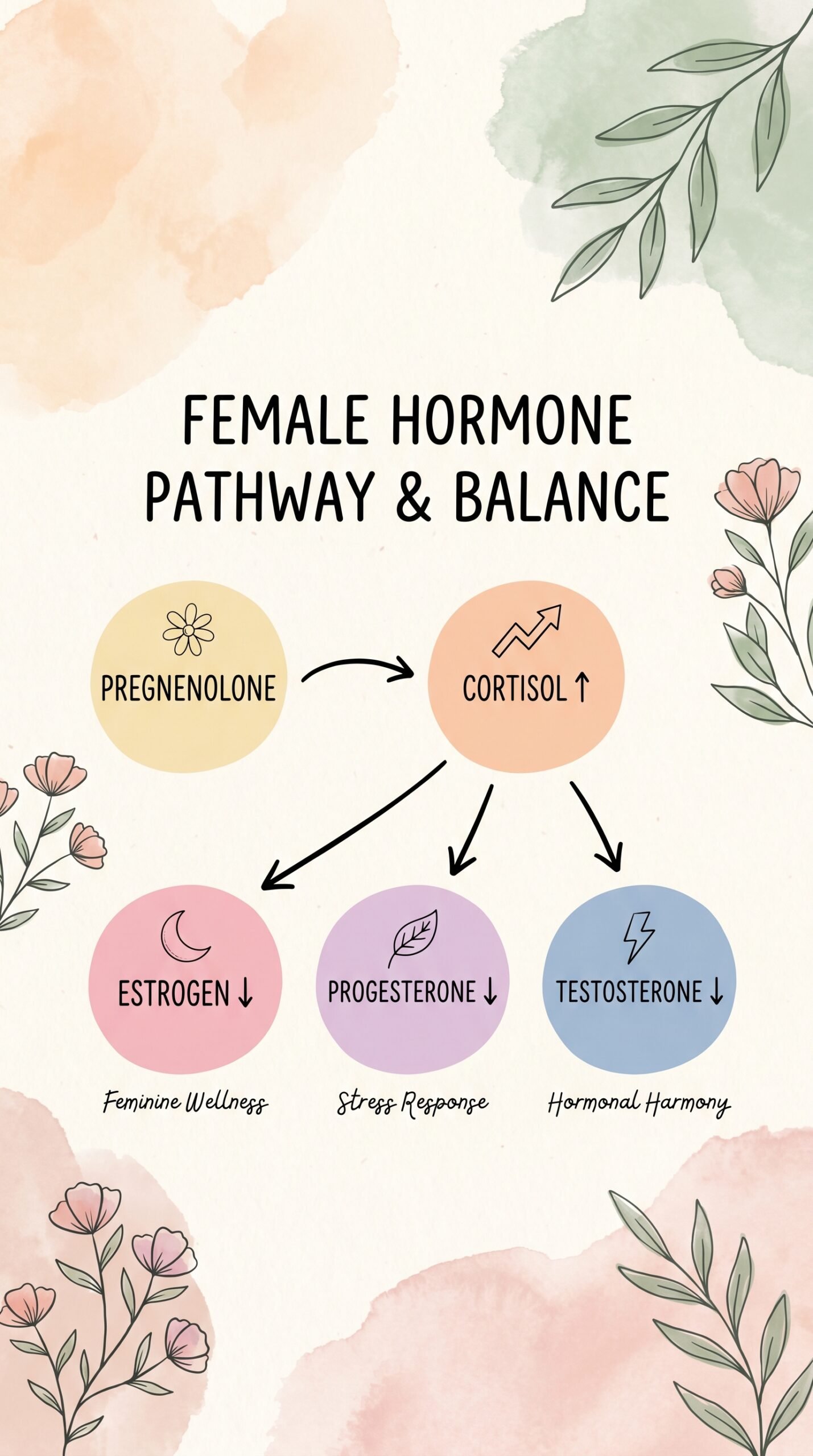
To understand why high cortisol tanks your sex drive, you need a brief look at how your hormones actually work together — because they don’t operate in isolation.
Your body runs on a system of hormonal checks and balances. Cortisol, estrogen, progesterone, testosterone — they all share raw material (a molecule called pregnenolone) and they all compete for it when supplies get tight.
When your body is under chronic stress, cortisol gets prioritized. From an evolutionary standpoint, this makes complete sense: if you’re running from a threat, reproduction is not your body’s priority. Survival is. So cortisol rises, and the hormones that support desire, pleasure, and reproductive function — primarily estrogen, progesterone, and testosterone — get sidelined.
This is called the cortisol steal — or pregnenolone steal — and it explains why prolonged stress so reliably kills desire. It’s not psychological. It’s biochemical. Your body is redirecting resources from “reproduction and pleasure” to “survive this emergency.”
The problem is that your nervous system can’t tell the difference between a life-threatening emergency and a chronic low-grade one. Difficult months at work, financial worry, a relationship that feels unsettled, constant overstimulation from screens and notifications — all of it registers as stress, all of it keeps cortisol elevated, all of it slowly pulls resources away from the hormones that fuel your desire.
Signs your cortisol might be the culprit
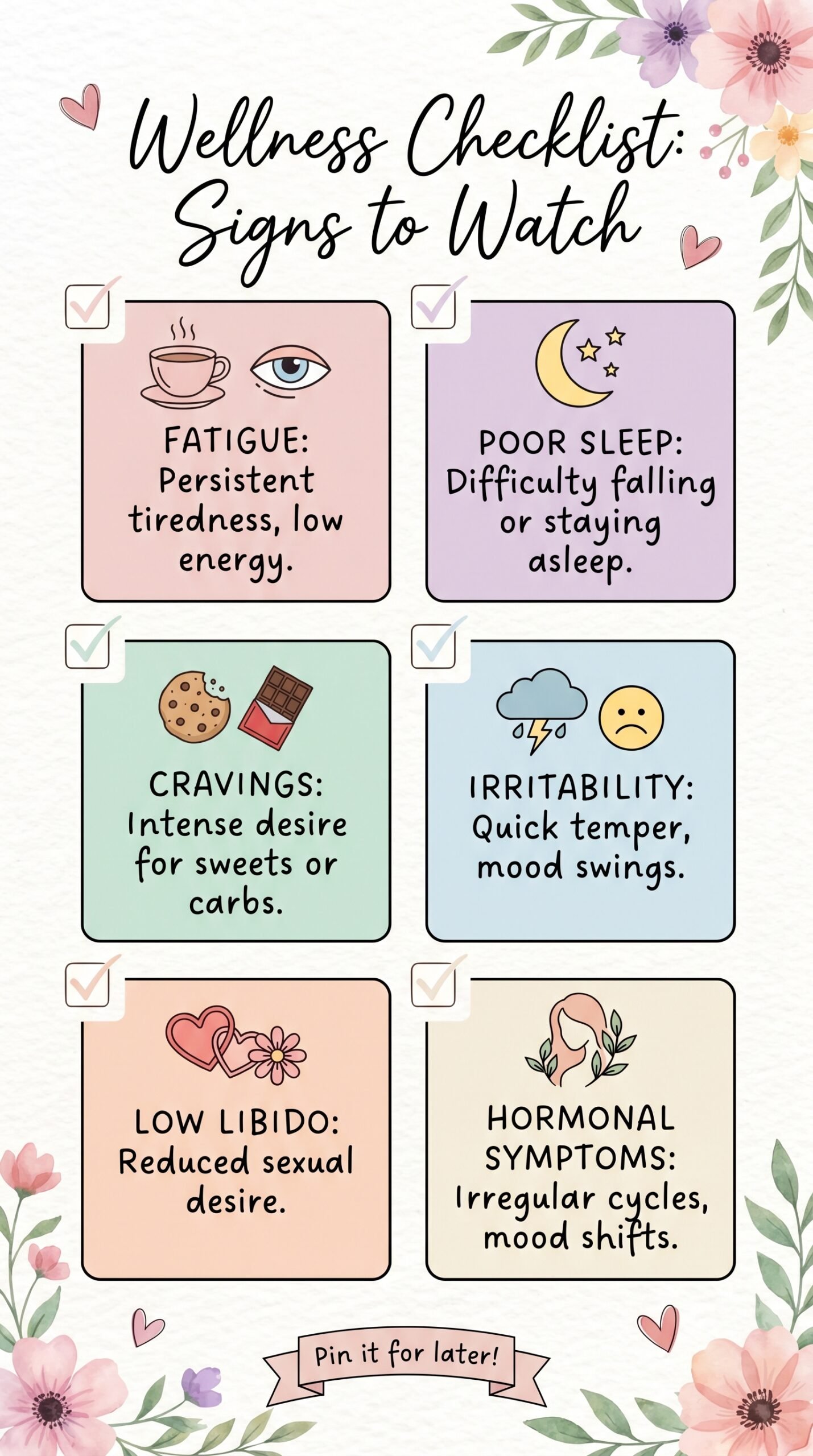
This isn’t a diagnostic checklist — your doctor can run labs to actually check your cortisol levels — but these are the patterns that tend to show up together when cortisol is chronically high.
You’re tired but wired. Exhausted all day, then suddenly alert at 10pm when your cortisol spikes at the wrong time instead of winding down for sleep. You lie in bed with a busy mind while your body is depleted.
Your sleep is broken even when you get enough hours. You wake between 2–4am and struggle to fall back asleep. This is often a cortisol pattern — levels that should be low in the early hours are spiking instead.
You feel irritable in a way that seems disproportionate. Small things that didn’t used to bother you set you off. Your nervous system is already running hot, so it has less buffer for normal friction.
Your appetite is unpredictable. Either you’re not hungry until late in the day, or you’re craving salt and sugar in a way that feels almost compulsive — both are cortisol-driven patterns.
Your cycle is irregular or your PMS has gotten worse. High cortisol disrupts the hormonal signaling that regulates your cycle. If your periods have become heavier, more painful, or less predictable under stress, this connection is worth knowing about.
You feel disconnected from your body in general. Not just sexually — just generally numb, or like you’re operating from the neck up. This is what chronic stress does to embodied sensation. It narrows your window of experience.
And the one you came here for: the desire just isn’t there. Not as often. Not as urgently. Sometimes not at all.
Why stress and sex don’t coexist well — the nervous system piece
There’s another layer to this beyond hormones, and it’s just as important.
Sexual arousal requires your nervous system to be in a state of relative safety. This is not a metaphor — it’s physiology. Your parasympathetic nervous system (the “rest and digest” mode) is the one that allows arousal, pleasure, and connection to happen. Your sympathetic nervous system (the “fight or flight” mode) is the one that shuts those things down in favor of survival readiness.
When you’re chronically stressed, you spend most of your time in sympathetic dominance. Your body is scanning for threat, your muscles are subtly braced, your digestion is compromised, your mind is restless — and your capacity for pleasure and desire is dramatically reduced because it’s physiologically incompatible with that state.
This is why the standard advice to “just relax and you’ll be in the mood” is so maddening and unhelpful. You can’t decide to activate your parasympathetic nervous system. You have to create the conditions for it. And that takes more than taking a bath once in a while.
What actually lowers cortisol (evidence-backed, practical)
This is the part that matters most, and I want to be direct about it: there’s no supplement that fixes this if the underlying lifestyle patterns stay the same. The foundations come first.
Sleep — non-negotiable, first priority
Cortisol and sleep are in a bidirectional relationship. High cortisol disrupts sleep. Poor sleep elevates cortisol. Breaking the cycle starts with treating sleep as a genuine health priority rather than the thing you sacrifice first when life gets busy.
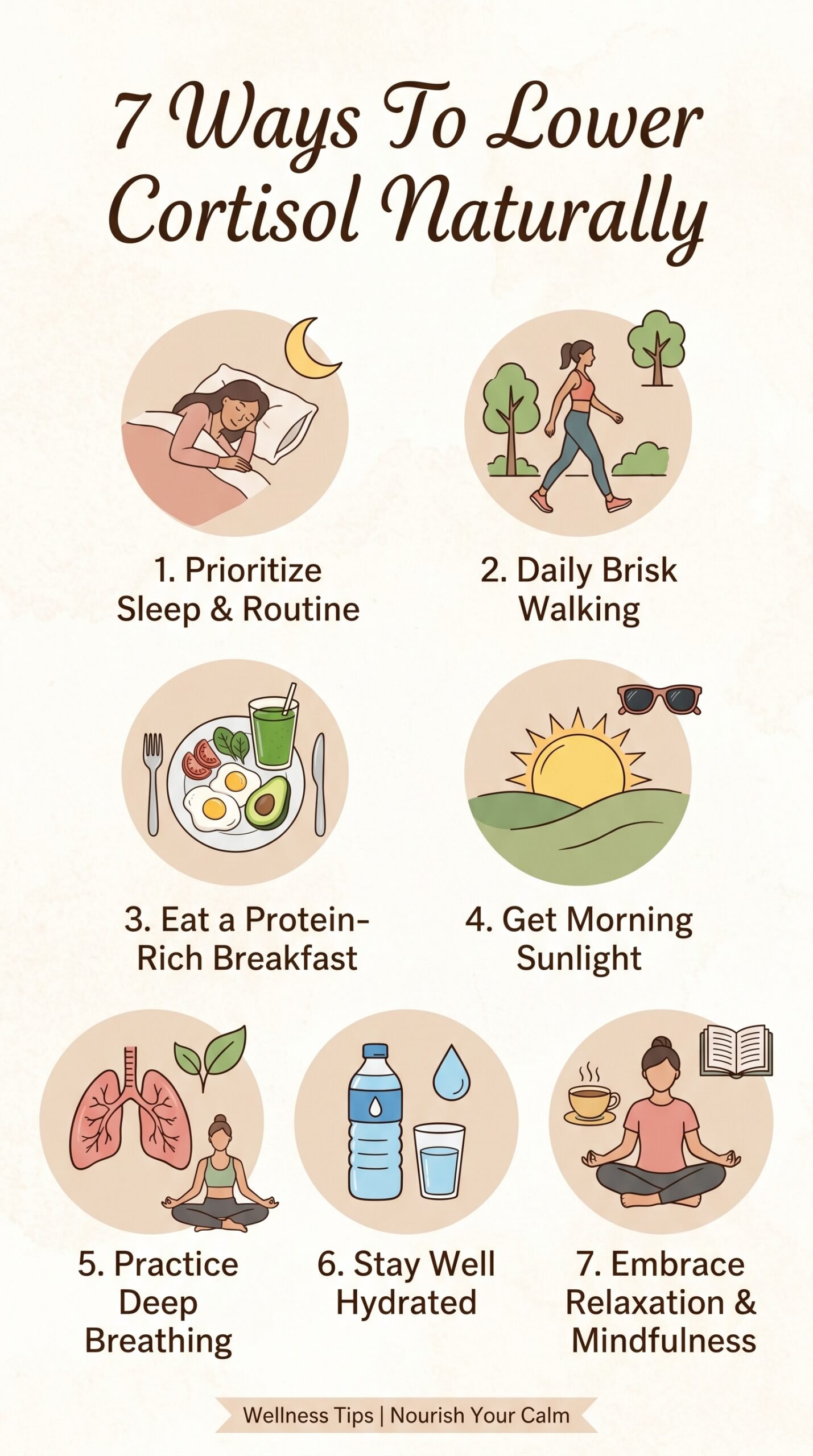
Specific things that make a measurable difference: consistent sleep and wake times (your cortisol rhythm is regulated by your circadian clock), getting natural light within 30 minutes of waking, and genuinely dark and cool sleeping conditions. The 10pm cortisol spike that keeps you wired at night is often made worse by blue light exposure in the hours before bed — screens, overhead lighting, phone in bed.
This is not exciting advice. It’s just what the research consistently shows works.
Regulate blood sugar — especially in the morning
One of the fastest cortisol triggers is blood sugar instability. When blood sugar drops, cortisol rises to compensate — which is why skipping breakfast, eating high-sugar foods first thing, or going long stretches without eating can create a cortisol spike cycle that runs all day.
A protein-forward breakfast within an hour of waking is one of the simplest and most effective things you can do for your cortisol pattern. Not a green juice, not coffee on an empty stomach (caffeine significantly elevates cortisol, especially when consumed before eating) — actual protein. Eggs, Greek yogurt, smoked salmon, a protein smoothie with real ingredients. Something that stabilizes your blood sugar from the start of the day.
(Speaking of which — I’ve put together a collection of high-protein, anti-inflammatory breakfast ideas that are specifically good for hormone health. [You’ll find them here.]
Movement that restores rather than depletes
Here’s one that surprises people: intense exercise raises cortisol. In healthy, well-rested people with a balanced cortisol pattern, this is fine — the spike is short and the body recovers. But in someone who is already cortisol-dominant and under-recovered, adding daily high-intensity workouts is like pouring more fuel on an already burning fire.
This doesn’t mean stop moving. It means that if you’re exhausted, wired, hormonally disrupted, and doing intense cardio or HIIT every day hoping it will help — it might be making things worse.
What actually lowers cortisol through movement: walking (genuinely one of the most effective cortisol-lowering activities available, especially outdoors), yoga and stretching, slow weight training with adequate rest between sets, swimming. Movement that feels restorative rather than punishing.
If you love intense exercise and it’s working for you, keep going. But if you’re depleted and your drive is gone, consider swapping some of your high-intensity sessions for something gentler for a few weeks and noticing how you feel.
Nervous system practices — the unsexy stuff that actually works
Your nervous system needs direct input to shift out of sympathetic dominance. The most evidence-backed ways to do this:
Breathwork. Specifically extended exhale breathing — where your exhale is longer than your inhale. The exhale activates the vagus nerve, which is the main highway of your parasympathetic system. Try 4 counts in, 6–8 counts out, for five minutes. It sounds almost too simple to work. It works.
Cold exposure (brief, not extreme). Cold water on the face or ending your shower with 30–60 seconds of cold activates the vagal response and can shift your nervous system state noticeably. Not an ice bath — just a cold finish.
Time without input. Silence, or near-silence. No podcast, no background TV, no scrolling. Chronic stimulation keeps your nervous system on alert. Regular quiet — even ten minutes of sitting without consuming anything — is actually regulatory.
Physical touch and connection. Non-sexual physical touch — hugging, massage, skin contact — releases oxytocin, which directly counters cortisol. This one is worth paying attention to in the context of intimacy: rebuilding physical closeness without the pressure of it needing to lead anywhere can actually help restore desire over time by rebuilding the felt sense of safety in your body.
Nutrition that supports hormone production
A few specific things that matter for the cortisol-sex drive connection:
Omega-3 fatty acids (fatty fish, walnuts, flaxseed, or a quality fish oil supplement) reduce inflammatory pathways that keep cortisol elevated. Anti-inflammatory eating more broadly — reducing ultra-processed food, sugar, and alcohol — reduces the chronic low-grade inflammation that acts as a stressor on the body.
Magnesium is depleted by stress and involved in cortisol regulation. Most people eating modern diets are mildly deficient. Dark leafy greens, pumpkin seeds, dark chocolate, and a magnesium glycinate supplement in the evening are all good sources.
Adaptogens — specifically ashwagandha, rhodiola, and holy basil — have the most evidence behind them for cortisol modulation. These are plants that help the body adapt to stress rather than overproduce stress hormones in response to it. Ashwagandha in particular has several well-designed studies showing reductions in cortisol and improvements in sexual function in women under chronic stress. Worth researching and discussing with your doctor before adding, especially if you’re on medication.
The intimacy piece: rebuilding desire when it’s been gone
Here’s something important: even once you address the physiological cortisol pattern, desire doesn’t always just snap back immediately. Especially if it’s been absent for a while.
The body needs to relearn safety. Pleasure. Presence.
A few things that help bridge the gap while your hormones rebalance:
Remove the pressure from sex itself. When desire has been low for a while, intimacy can start to feel like a test — something you’re supposed to want and don’t, which adds a layer of anxiety that makes desire even less accessible. Taking the explicit goal of sex off the table temporarily — just touching, closeness, warmth with no destination — often helps desire return more naturally than trying to perform it.
Prioritize non-sexual physical pleasure. The same practices that lower cortisol — massage, long baths, comfortable clothing against your skin, movement that feels good — also rebuild your relationship with your body’s capacity for pleasure generally. Desire lives in the body. The more present you are in your body in small daily ways, the more accessible it becomes in intimate moments.
Talk to your partner — if you have one. This is not an easy conversation but it’s an important one. “I’ve been stressed and I think it’s affecting my hormones and my desire, and I’m working on it” is a complete, honest, and connecting thing to say. Most partners would rather know what’s happening than be left guessing. And the act of being honest about it usually reduces some of the performance pressure that’s making things harder.
When to actually talk to a doctor
Lifestyle changes matter — genuinely, measurably. But they’re not everything, and there are situations where the hormonal disruption is significant enough to warrant actual medical evaluation.
Talk to your doctor if: your periods have become severely irregular or you’ve missed several, your fatigue is debilitating and doesn’t improve with rest, your mood is significantly impacted in a way that interferes with daily life, or you suspect you may have a thyroid condition (often co-occurring with adrenal stress patterns) or PCOS.
Ask specifically about a DUTCH hormone panel or a four-point salivary cortisol test — these give a much fuller picture of your cortisol pattern throughout the day than a standard blood draw, which only captures one moment.
A functional medicine doctor or naturopath with experience in women’s hormone health can be particularly helpful here if your conventional doctor isn’t finding answers.
The short version: where to start today
If you read all of that and feel slightly overwhelmed, here’s the simplest version:
This week: Eat protein within an hour of waking. Stop caffeine on an empty stomach. Get outside for a 20-minute walk daily.
This month: Prioritize consistent sleep times. Add 5 minutes of extended-exhale breathing before bed. Replace one high-intensity workout per week with something gentler.
Ongoing: Reduce ultra-processed food and alcohol. Consider magnesium glycinate in the evening. Research ashwagandha. Get labs done if symptoms are significant.
None of this is complicated. Most of it is unsexy. And all of it compounds — meaning that the effect of doing several of these things consistently is significantly greater than any one of them alone.
Your body is not broken. It is responding — logically, predictably — to a prolonged state of stress. Give it what it needs to feel safe, and it will come back to itself.
Including the part of itself that wants.
FAQs: Cortisol and sex drive
How long does it take to see improvement in libido after addressing cortisol?
Honestly, it varies — but most women notice some shift within 4–8 weeks of consistent lifestyle changes, with more significant improvements at the 3-month mark. Hormones change slowly. The lifestyle changes that support them need time to accumulate. If you’re expecting results in two weeks, you’ll be disappointed; if you give it a genuine 90 days, you’ll likely see real change.
Can cortisol cause low libido even if I don’t feel particularly stressed?
Yes — this is one of the most important things to understand. Cortisol can be chronically elevated from lifestyle factors (poor sleep, blood sugar instability, over-exercising, chronic inflammation from diet) even when you don’t consciously feel stressed. The body doesn’t require emotional stress to produce a cortisol response. This is why many women who say “I’m not that stressed” still have the hormonal pattern of someone who is.
Does alcohol help with stress and cortisol?
Alcohol reduces perceived stress in the moment but actually increases cortisol production. It also significantly disrupts sleep architecture (even moderate amounts), which worsens the cortisol cycle the next day. If unwinding with a glass of wine has become a nightly stress-management strategy, it may be working against you hormonally — even though it feels like it’s helping.
What’s the relationship between cortisol and estrogen?
High cortisol can suppress estrogen production through the pregnenolone steal mechanism described above, and it also affects the liver’s ability to properly metabolize and clear estrogen. Both too little and too much estrogen (poorly metabolized) create problems for libido, mood, and cycle regularity. This is why chronic stress often shows up as cycle irregularity — it’s disrupting the hormonal cascade that regulates the whole system.
Should I take ashwagandha?
The evidence for ashwagandha is genuinely good — several well-designed randomized controlled trials show it reduces cortisol and improves sexual function in women with chronic stress. However, it’s contraindicated with some thyroid conditions and medications, and supplement quality varies enormously. Talk to your doctor before adding it, buy from a reputable brand that third-party tests their products, and give it at least 8–12 weeks to assess the effect.
One last thing
Your body is not failing you. It is protecting you — or trying to, in the only language it knows.
High cortisol is your system doing exactly what it evolved to do when it perceives the world as unsafe or overwhelming. The problem is that modern life keeps that system switched on continuously, and it was never designed for that.
Lowering your cortisol is not a wellness trend. It’s about giving your body — and specifically the parts of it that feel pleasure, desire, and connection — permission to come back online.
That’s worth prioritizing. You are worth prioritizing.
Feeling disconnected from your body in the bedroom too? Here’s [how to actually feel present and confident during sex — not just go through the motions.]
And if your relationship dynamic has been affected by how you’ve been feeling lately — including a drop in desire — [here’s how to rebuild intimacy and emotional closeness with your partner.]
Want to eat in a way that genuinely supports your hormones? [Here are the anti-inflammatory breakfast ideas that actually taste good and take under 10 minutes.]
Category: Wellness & Intimacy
© Polia.blog — Written with love and honesty, always.